Ceremony, Awelye, and Sacred Body Painting
Before mark making moved to linen, sacred ochres were applied directly to human skin for ceremony, identifying clan, skin lineage, and ceremonial authority.
Aboriginal body painting, known in the Eastern Desert as awelye, is one of humanity's most ancient and intimate ceremonial art practices. During ritual gatherings, senior women grind natural white pipe clay, yellow ochre, red earth, and animal fats to prepare rich ceremonial paints.
Using fingers or soft twigs, women trace bold stripes, curves, and breast markings that signify their skin group, kinship obligations, and inherited Dreaming stories. The act of applying paint is itself a spiritual meditation accompanied by rhythmic singing and foot stamping into the red soil.
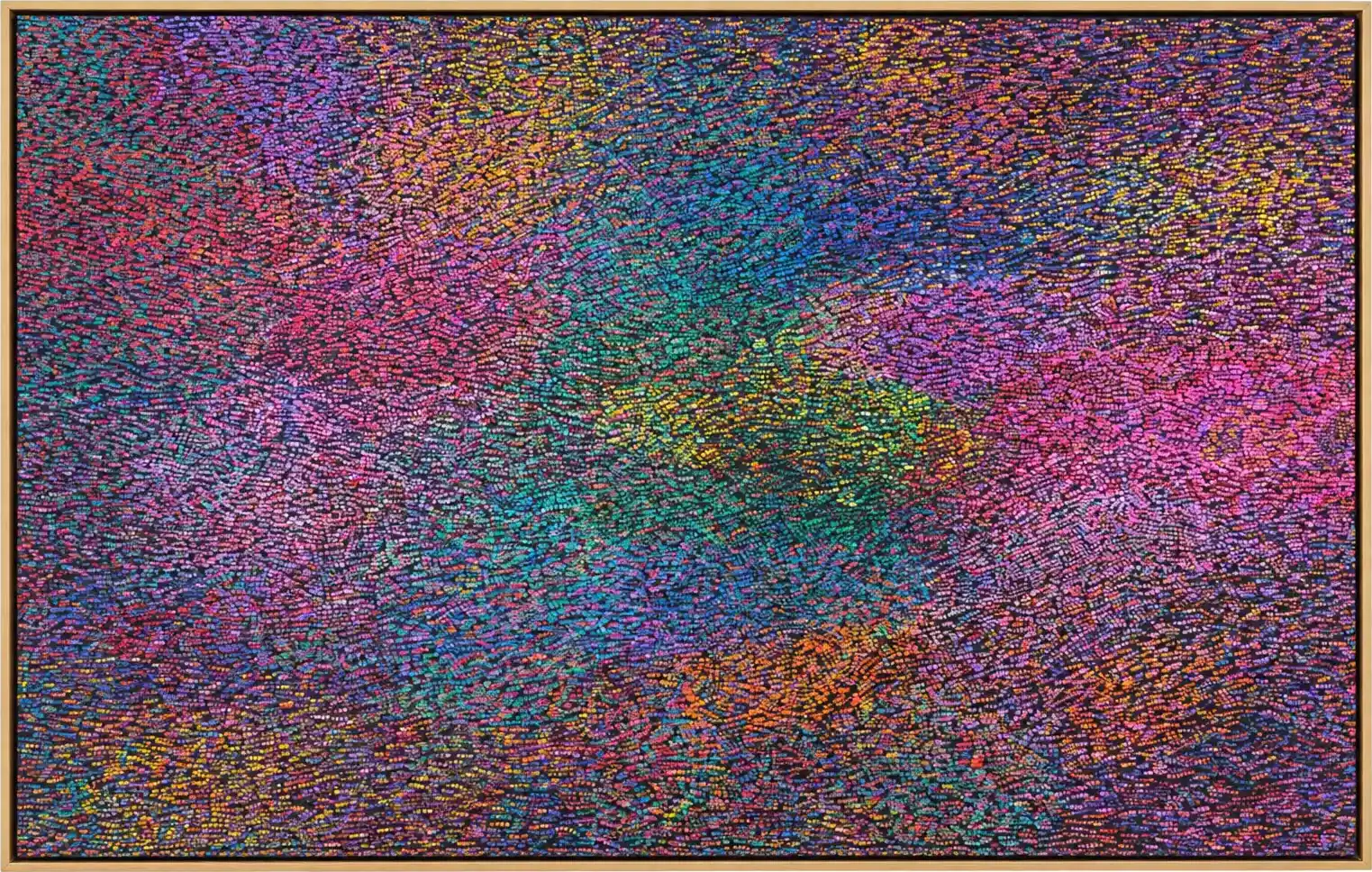
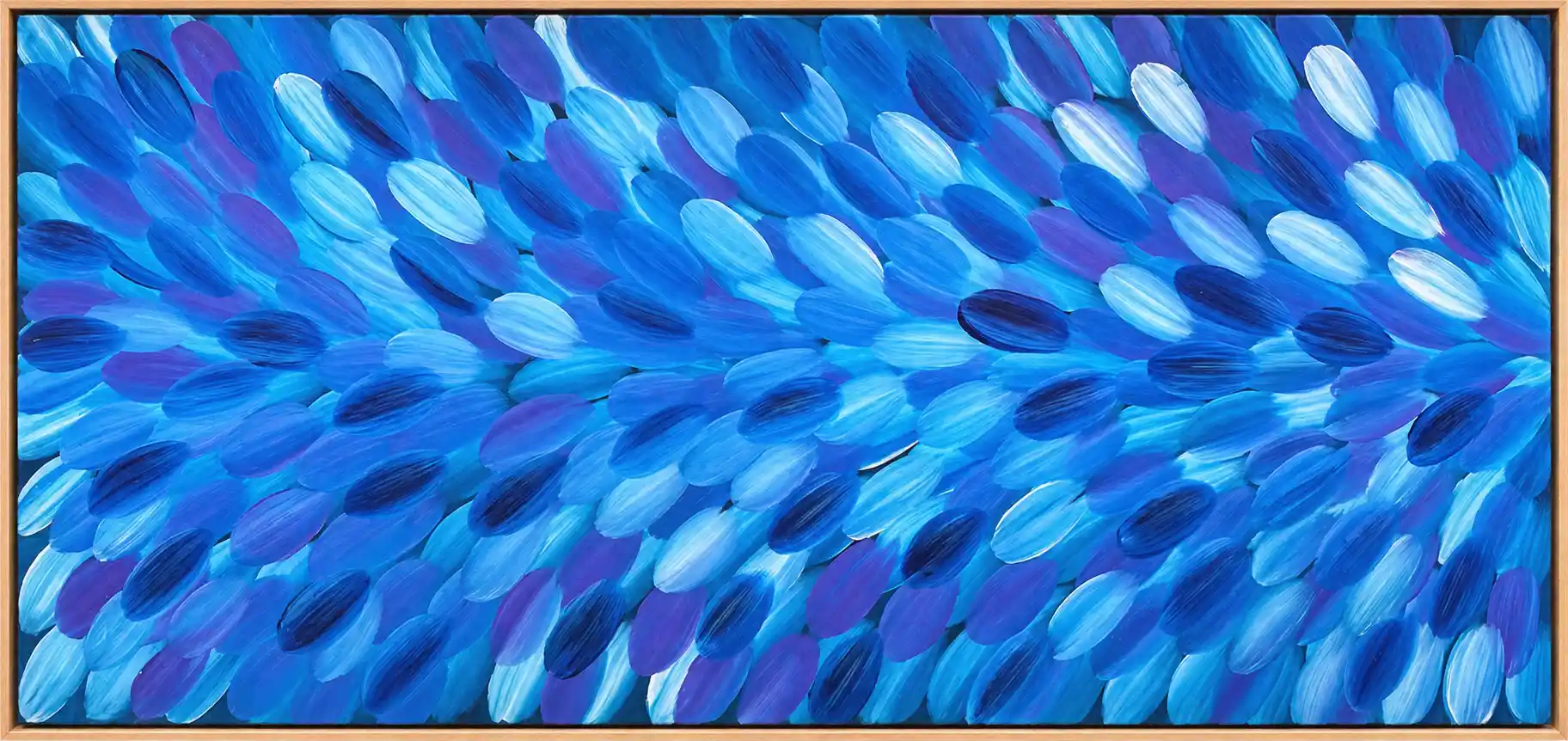
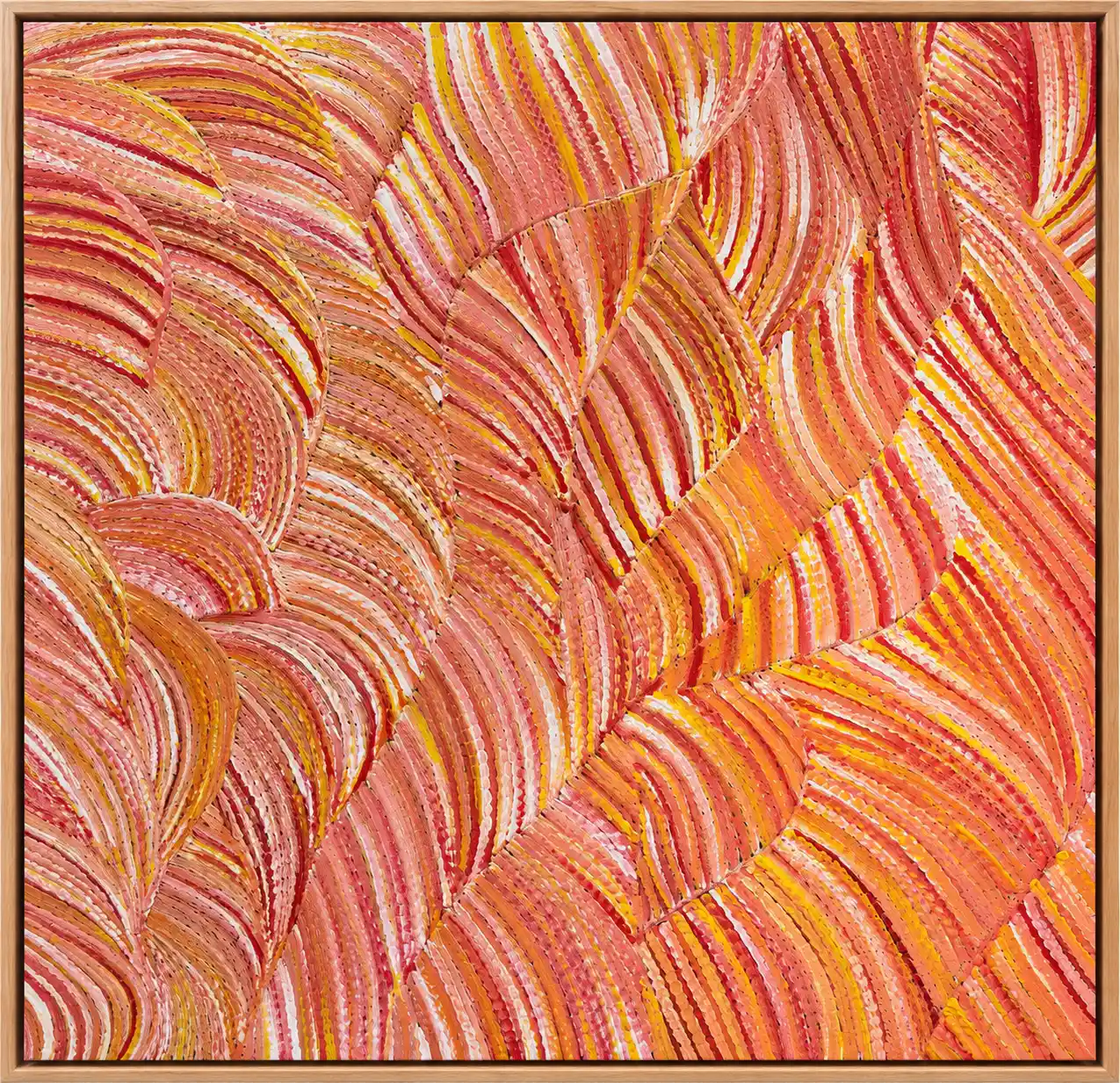
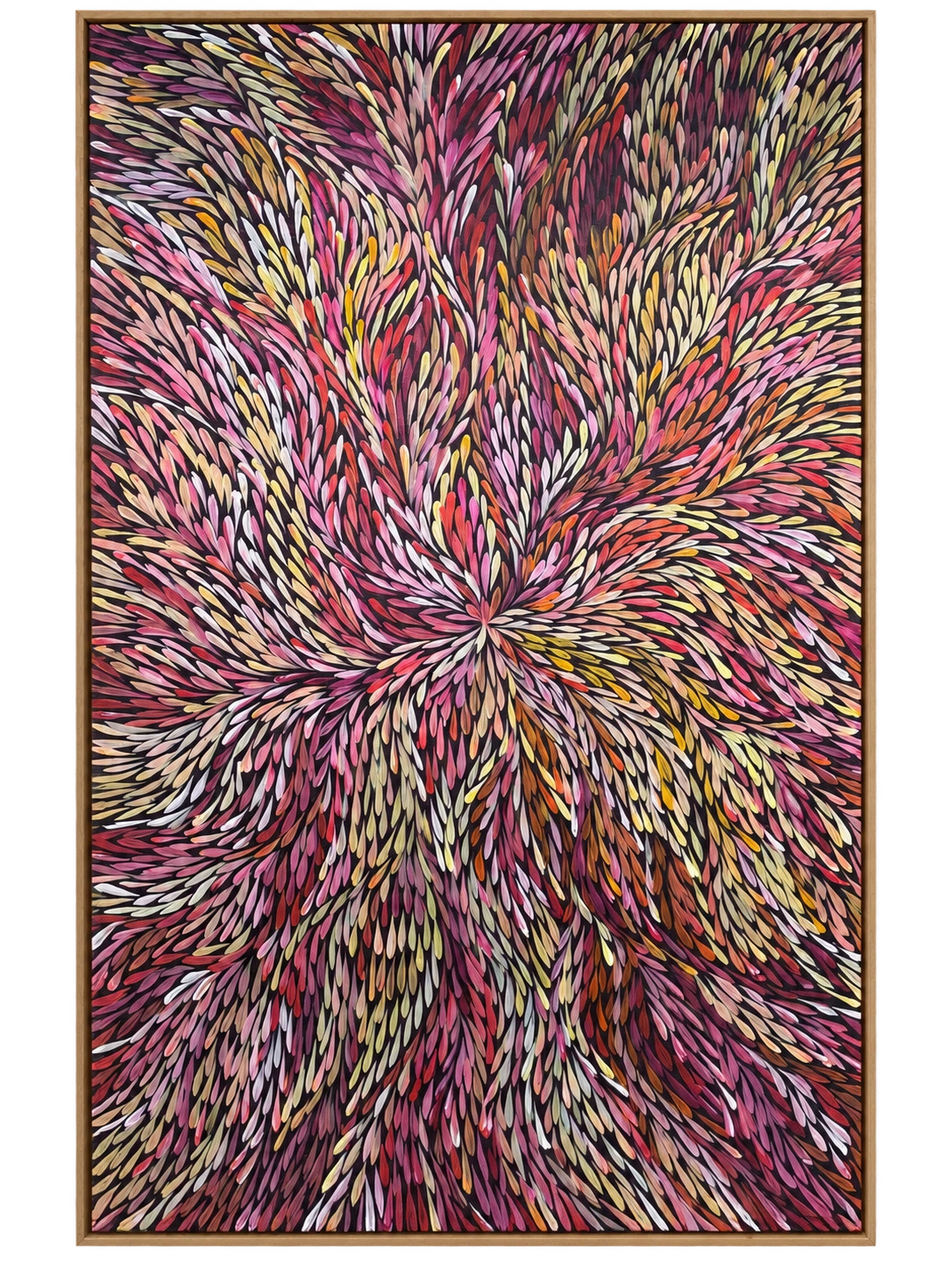
While body paint is inherently temporary, washing away when ceremony concludes, modern painters carry these identical ceremonial motifs onto canvas. These works preserve the power and presence of women's ceremony in enduring form for collectors around the globe.