 Hover to view full
Women Ceremony
Louise Numina
Decoding concentric rings, footprints, meeting grounds, and songlines
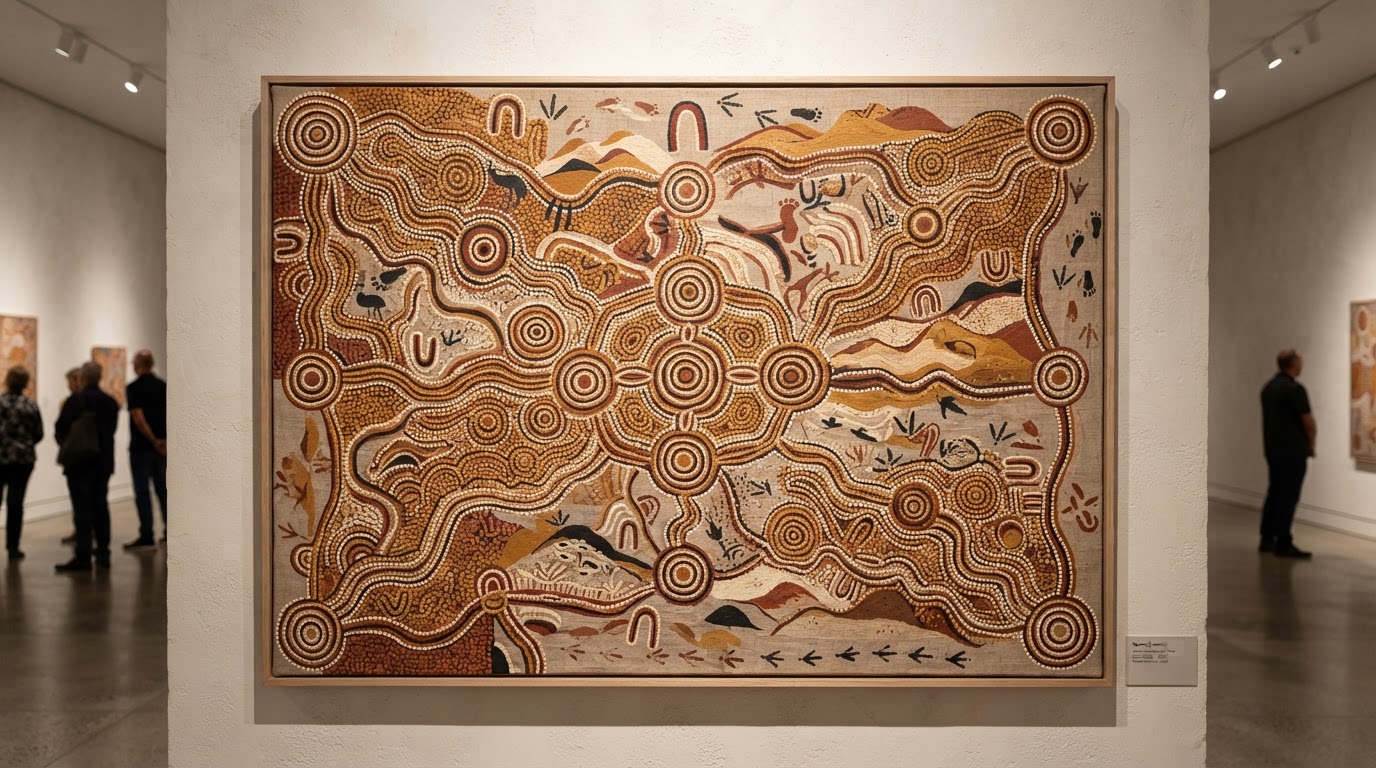
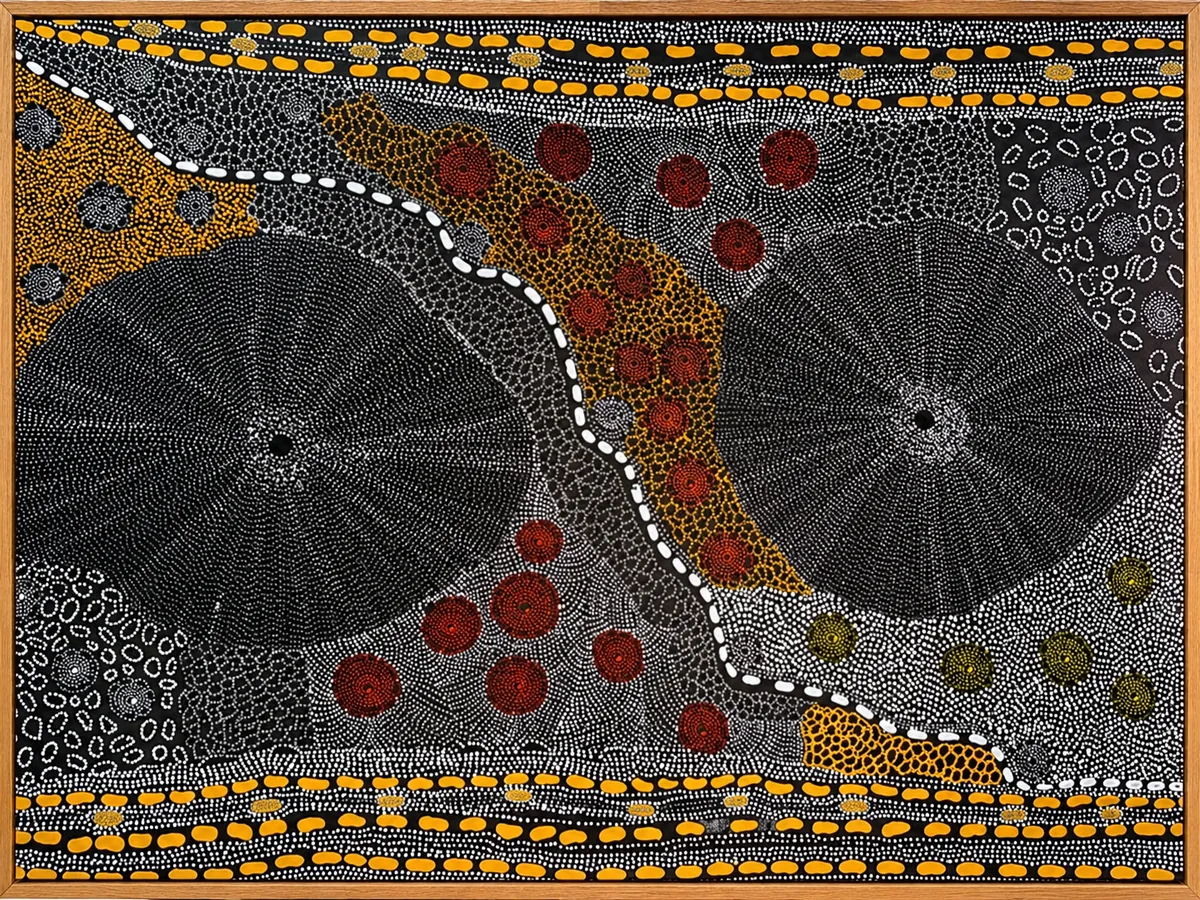
Aerial perspective
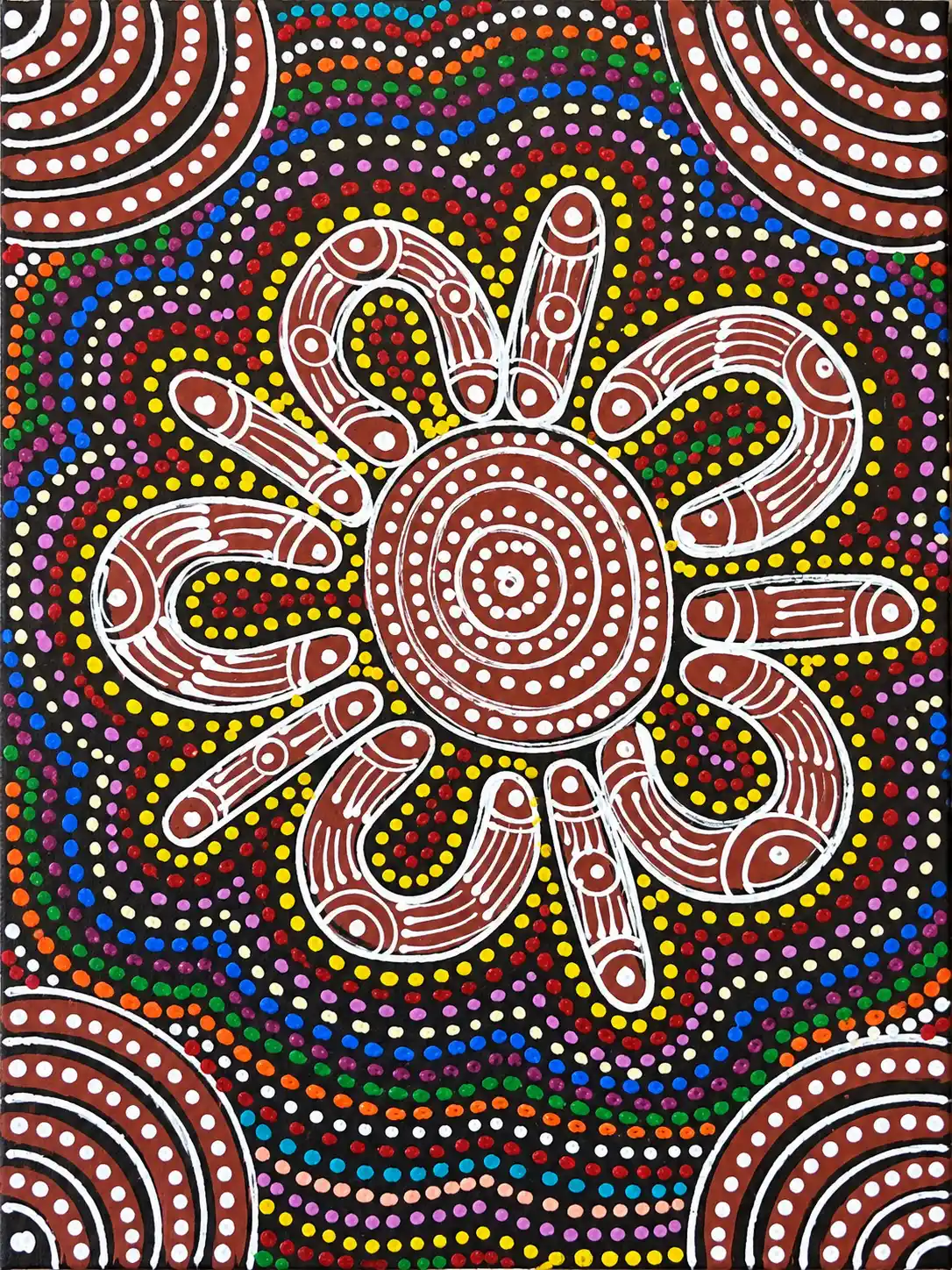
Many Central Desert canvases map country from above, looking down upon sandhills and water sources
Layered meanings
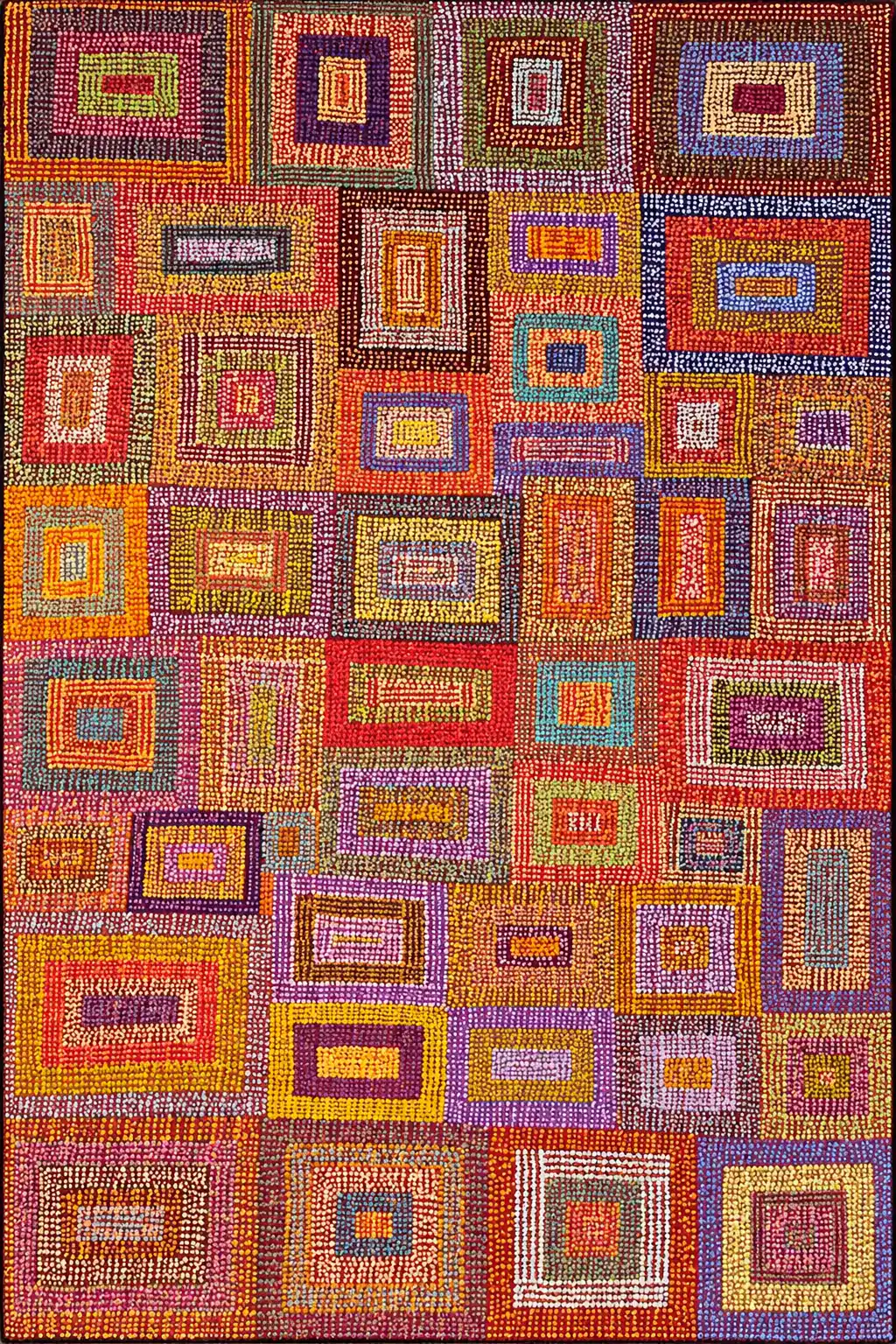
A public layer teaches general stories while sacred ceremonial dimensions remain protected
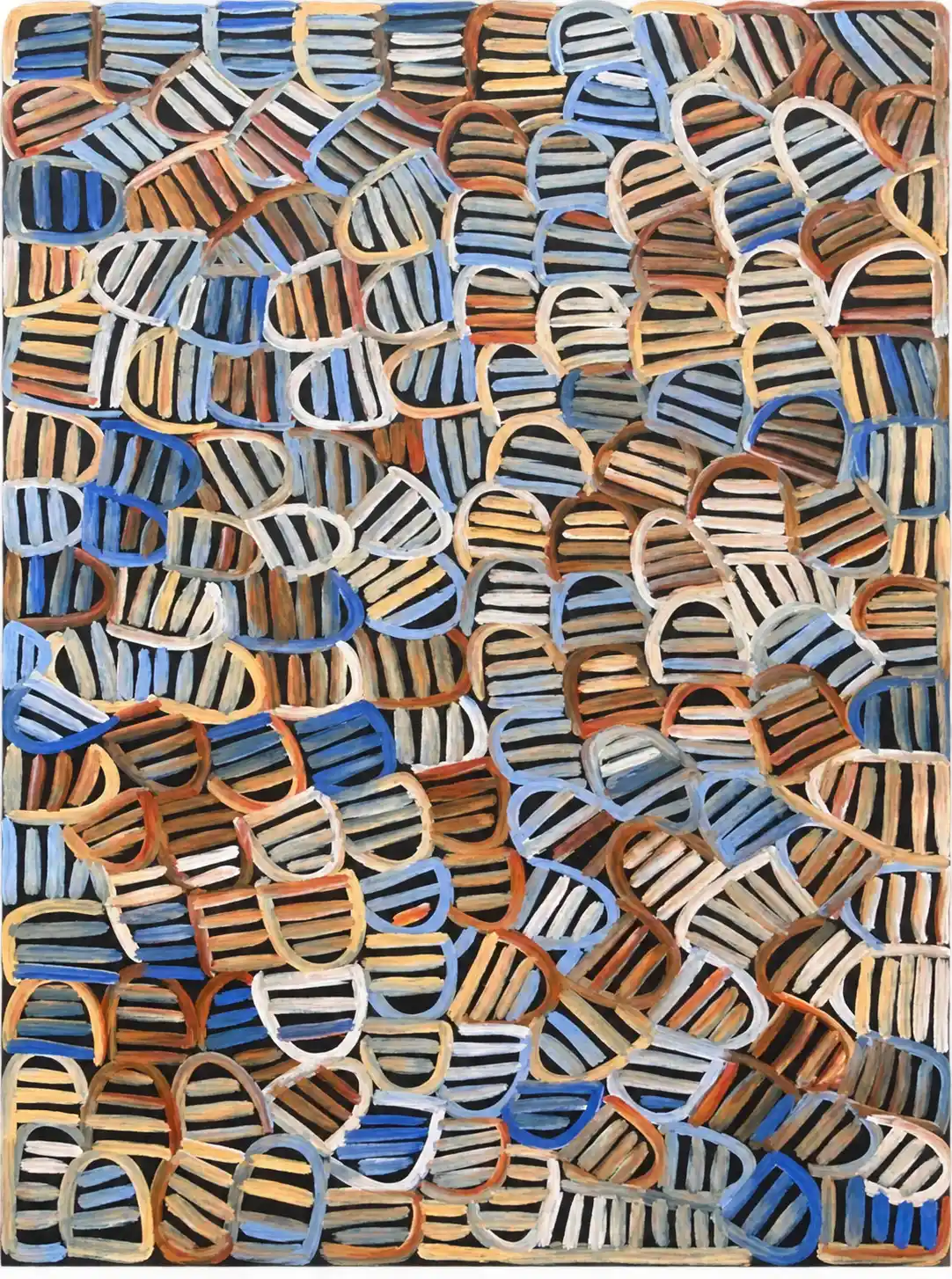
Imprint of presence
U shapes reflect the human imprint left in red earth during ceremonies and daily life
Aboriginal art communicates through an intricate visual vocabulary refined over millennia. What appears to an untrained eye as purely abstract pattern is in fact an aerial topography and cultural chronicle, a system of marks that records country, ceremony, and the journeys of ancestors across the land.
This visual language was developed long before any written alphabet existed in Australia and remains one of the most sophisticated symbolic systems on earth. Across the red sand of Central Australia, symbols drawn with fingers or ceremonial sticks conveyed vital survival information and sacred narratives. The marks were not decoration but a form of writing, a way of recording the law, the land, and the stories that governed life in some of the most demanding environments on the planet.
Concentric circles often represent waterholes, soakages, campsites, or sacred ceremonial meeting places. These circles are among the most frequently used marks in desert painting, and their meaning flows from the reality of life in arid country. In the Central and Western Deserts, where surface water is rare and precious, knowing the location of a reliable waterhole was a matter of survival. A circle on canvas could mark that place, recording it as a map that could be read by those who knew the code.
Straight lines or wavy tracks connecting these circles trace songlines, the paths walked by ancestors or seasonal travelling routes used by generations. A straight line between two circles may mark the route between water sources, while a wavy line often represents running water, the flow between soakages, or the path of an underground creek. In a land where hidden water could mean the difference between life and death, the ability to record the presence of water, even beneath the sand, was knowledge of the highest importance.
U shaped marks depict people seated cross legged on the ground, leaving an imprint in the sand. This simple, elegant form came to represent a human being, and it appears throughout desert painting. When accompanied by straight lines and small curved strokes, the U shapes depict women with digging sticks and coolamon bowls, or hunters with spears and boomerangs. A group of U shapes arranged around a central circle shows people gathered at a campfire or ceremonial site, a portrait of community encoded in a handful of marks.
Critically, the same symbol can carry layered meanings. An outer public layer is shared with the wider world, while sacred, ceremonial meanings are understood only by initiated custodians of that specific country. A circle may be a waterhole in one painting and a campfire in another. The full meaning is held by the artist and their kin, and only part of the story is shared publicly. This layered quality protects sacred knowledge while still allowing the beauty of the work to be appreciated by wider audiences.
Reading these symbols opens a doorway into the depth of Aboriginal art. Rather than reading a painting as decoration, the viewer begins to see a living document of country, kinship, and the enduring relationship between people and the land that has sustained them for tens of thousands of years. Every line is intentional, every mark grounded in a lived connection to country that reaches back further than any other artistic tradition on earth.