Fire Dreaming: Waru Tjukurrpa and the Care of Country
Waru Tjukurrpa, the Fire Dreaming of the Western Desert, records the ancestral origins of fire and its continuing use as a tool for hunting, ceremony, and land management.
Fire has always been central to life in the arid interior, and the Waru Tjukurrpa, or Fire Dreaming, encodes the knowledge of how fire came to be and how it should be used. Far from a force to be feared, fire was understood as a careful instrument that, handled with the right knowledge, renewed the land and sustained its people.
The story tells of ancestral beings who carried fire across country, lighting the spinifex and grasslands in a controlled way. This practice, now recognised internationally as cultural burning, cleared old growth, encouraged fresh seed to germinate, and drew grazing animals into the open where they could be hunted. The land depended on fire to regenerate, and the people depended on the land.
One well known narrative from the Warlukurlangu country tells of a blue tongued lizard ancestor who used fire in a story of law and consequence, reminding listeners that fire carries responsibility as well as power. The Dreaming binds the use of fire to moral obligation, teaching that country must never be burned carelessly or without purpose.
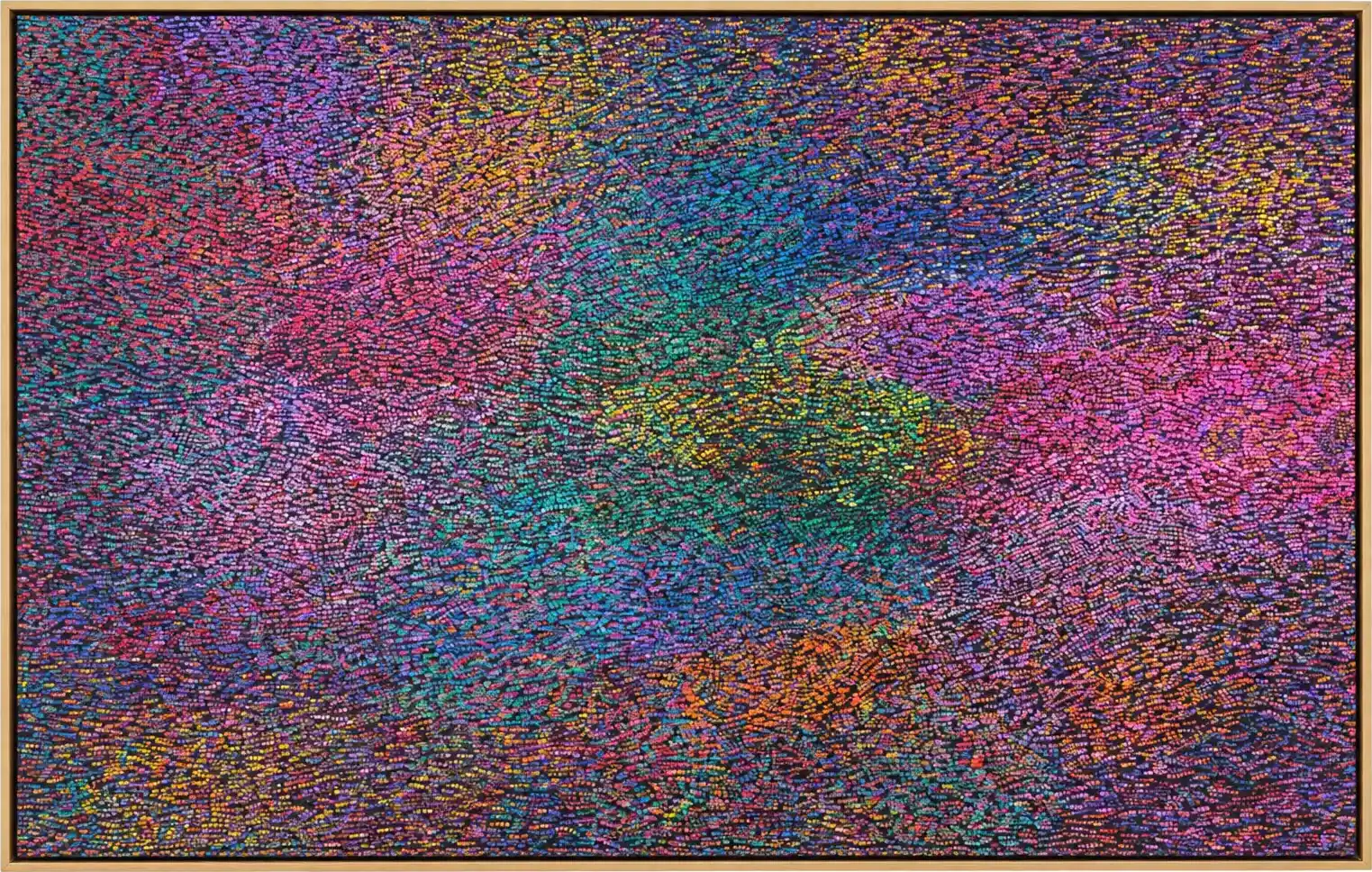
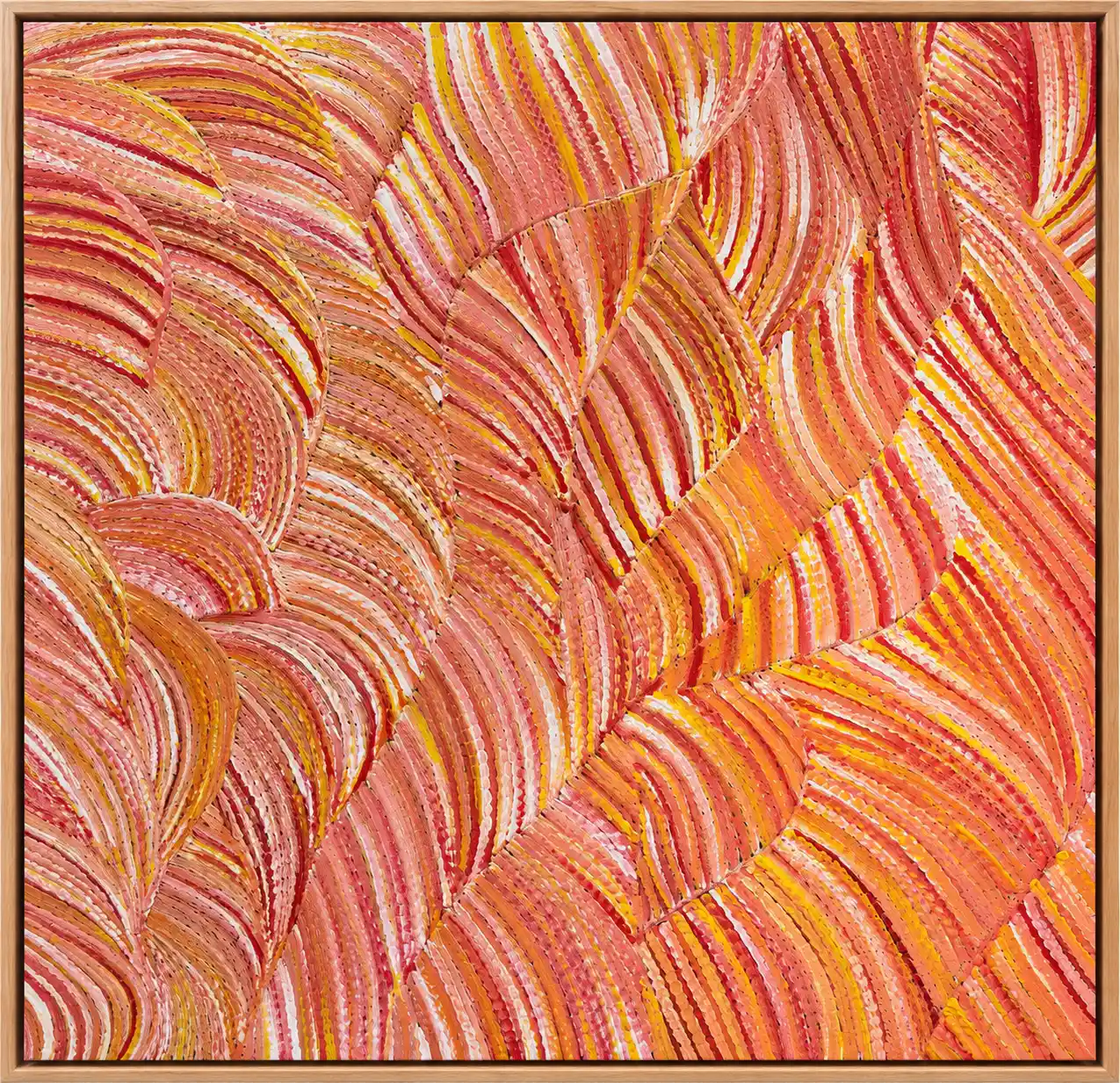
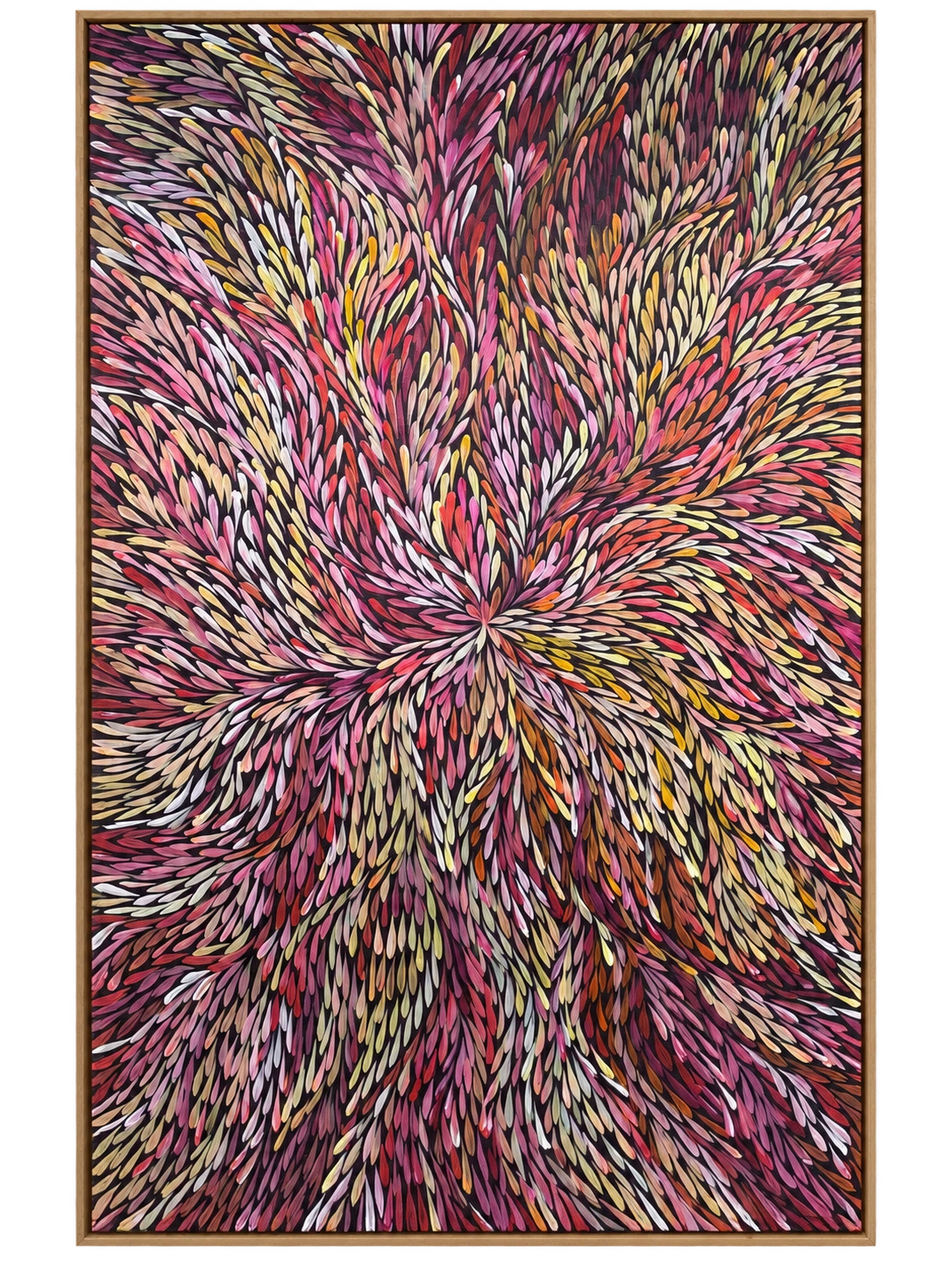
In painting, Fire Dreaming is often shown through radiating lines, warm earth tones, and the tracks of creatures moving away from or toward the burn. The works are not merely records of a technique but affirmations of an ancient covenant between people and land, in which fire is a gift to be used wisely so that country can keep living.