Wind Dreaming: Walpa Tjukurpa and the Calling of the Breeze
Walpa Tjukurpa, the Wind Dreaming, tells of ceremonies performed to call up the wind, one of the many ways desert people worked with the forces of country.
The Walpa Tjukurpa, or Wind Dreaming, is a story and a practice from the Western Desert that speaks of the relationship between people and the moving air. In the intense heat of the desert a cooling breeze is a gift, and the Wind Dreaming records the ceremonies through which people could call the wind to ease the land.
The story is tied to particular stretches of sacred ceremonial country, places of hills and rock holes where the wind ancestors are present. Custodians of this Dreaming carry the songs and the knowledge to perform the ceremony, and the painting of the story is itself a way of keeping that knowledge alive and in the right hands.
Wind Dreaming reflects a broader understanding within Aboriginal culture that people are not passive before the forces of nature but are in active relationship with them. The wind can be called, the rain can be sung, and the land responds to the ceremonies performed in the right way by the right people. This is not control but reciprocity, a recognition that country and people depend on one another.
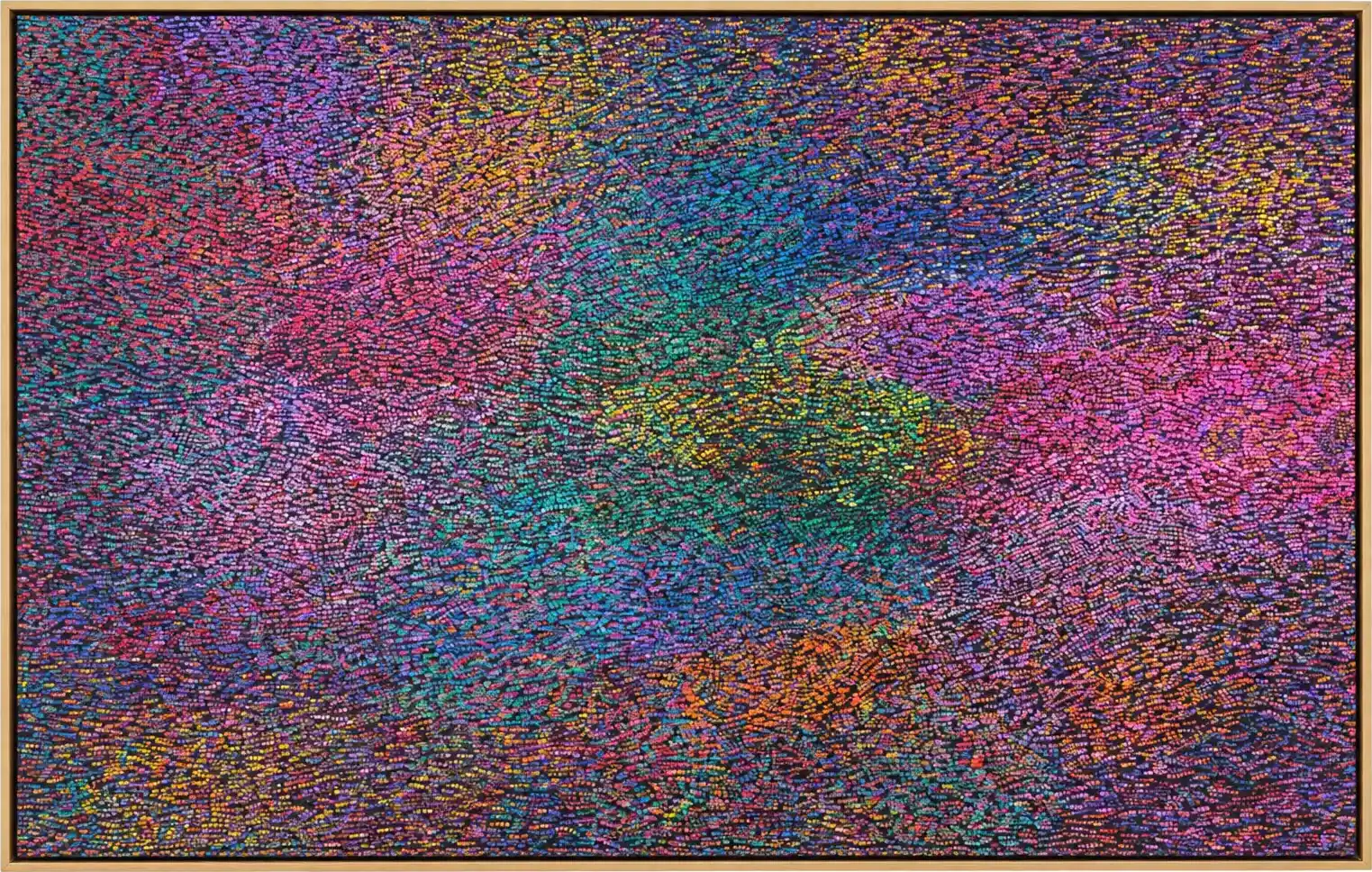
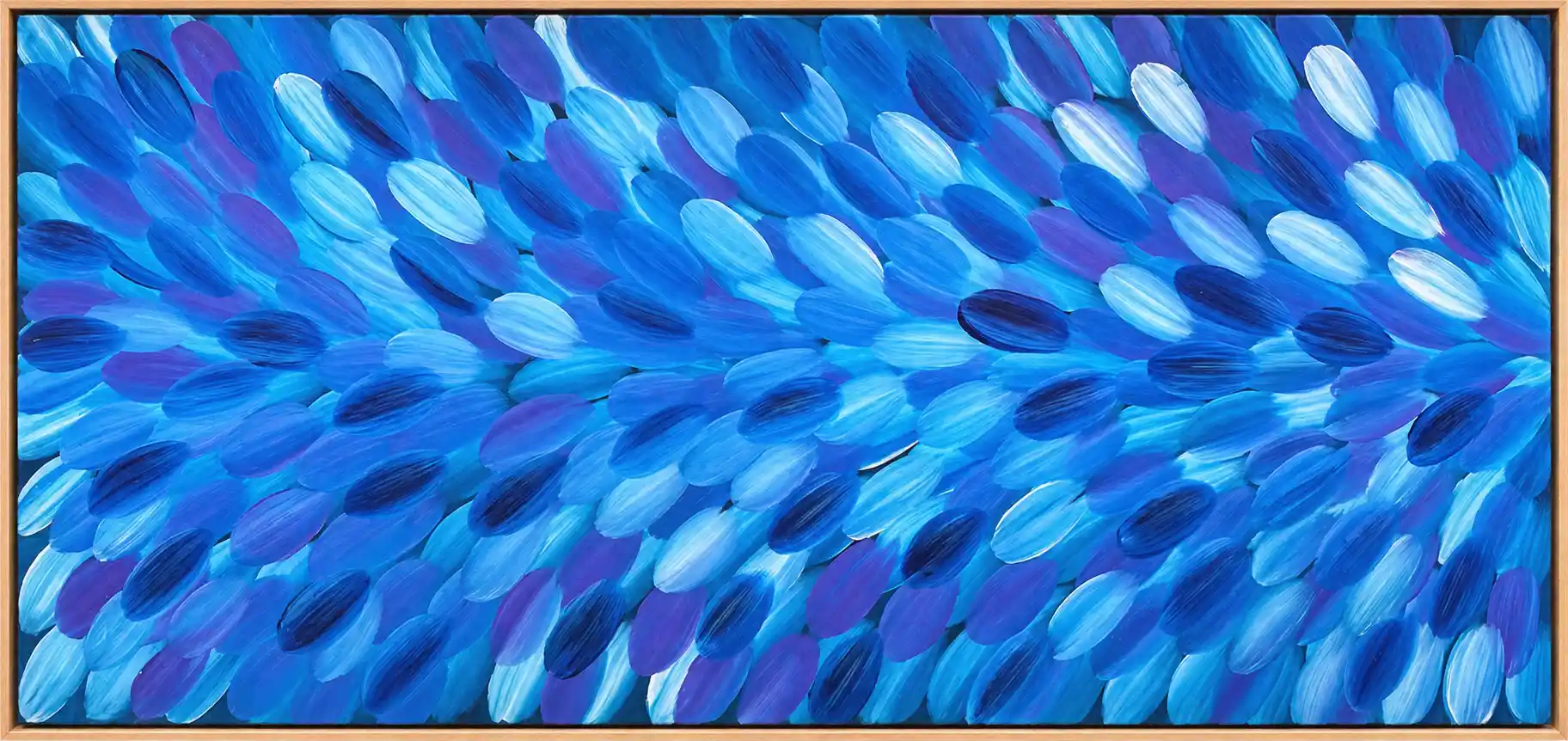
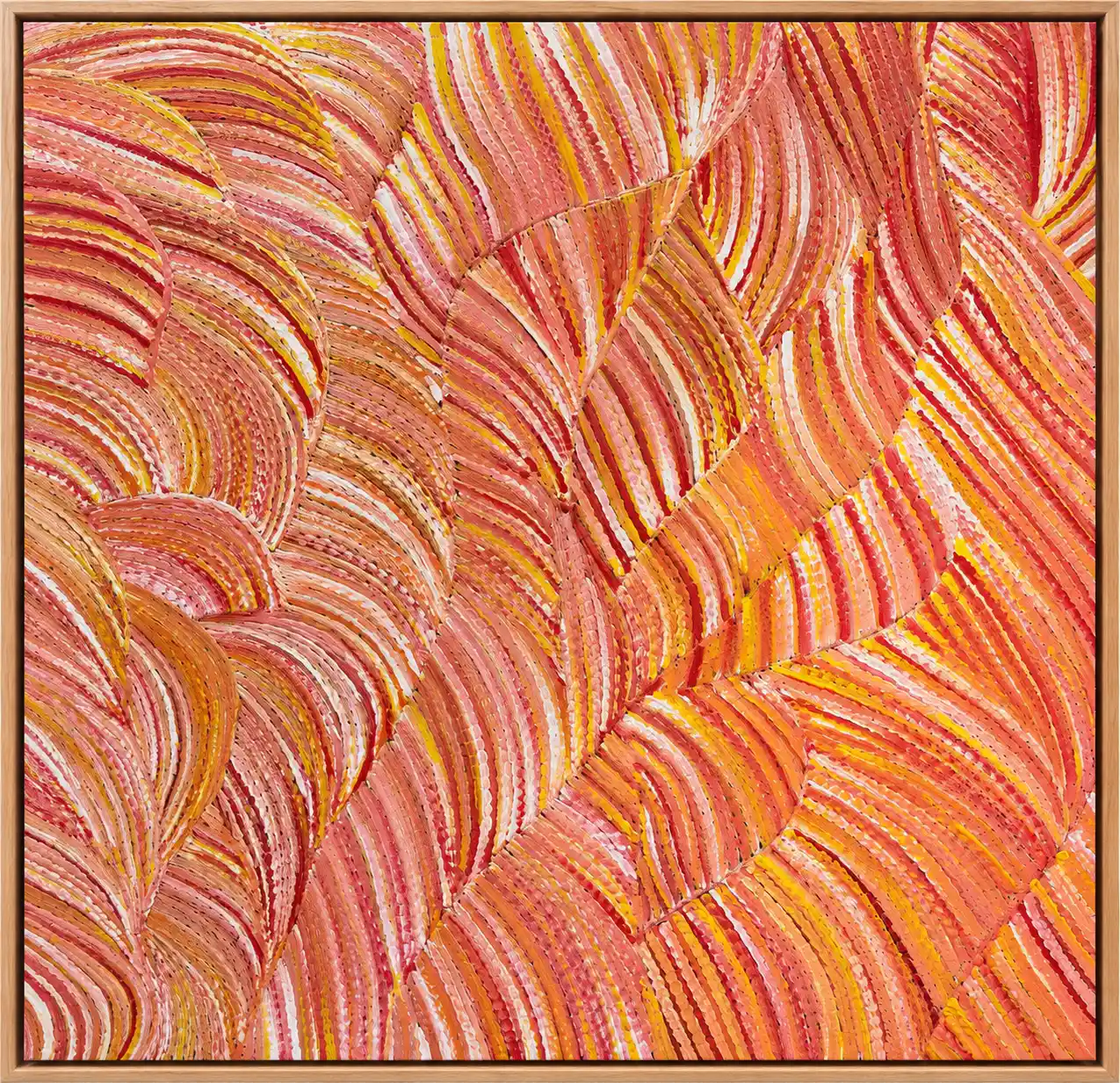
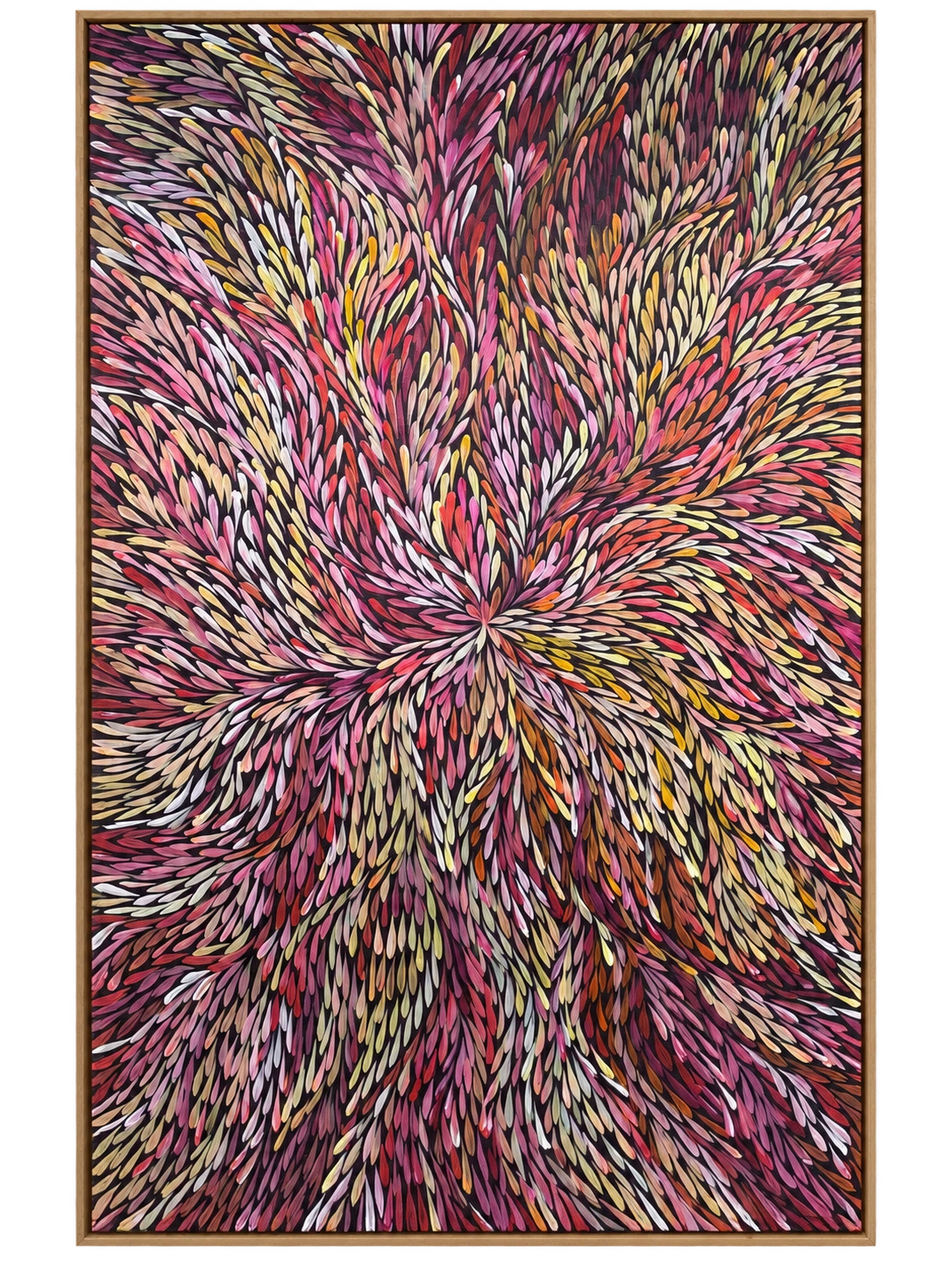
In art, Wind Dreaming is often rendered through flowing lines and a sense of movement across the surface, the visual echo of air moving across sand and stone. The works carry a feeling of openness and breath, and they remind the viewer that the wind is not empty space but a presence, an ancestor, and a force that has been honoured and worked with for as long as people have lived in the desert.