Sold Hover to view full
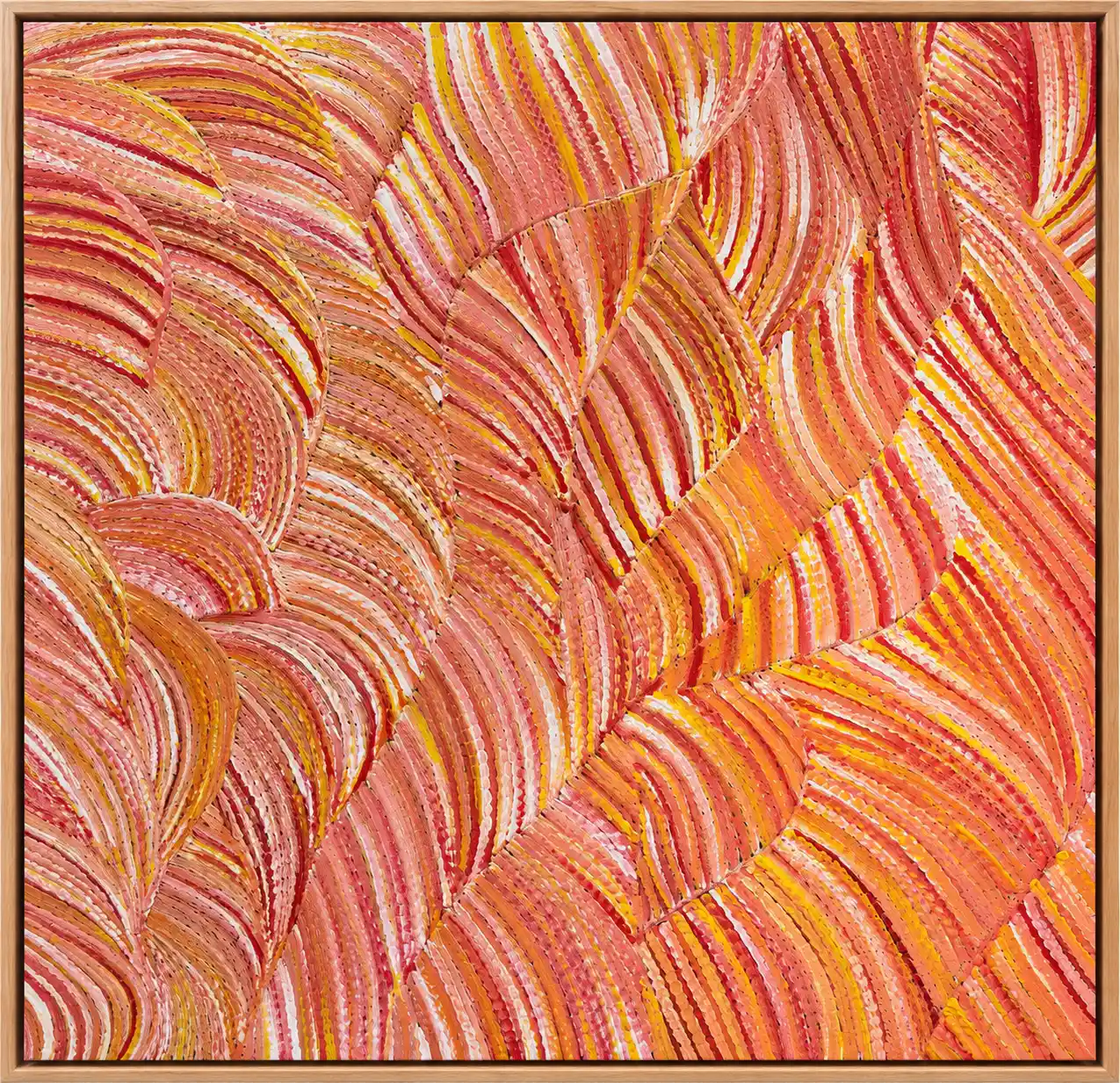
Bush Medicine Leaves
Gloria Petyarre
The Papunya Tula renaissance and the birth of modern desert fine art
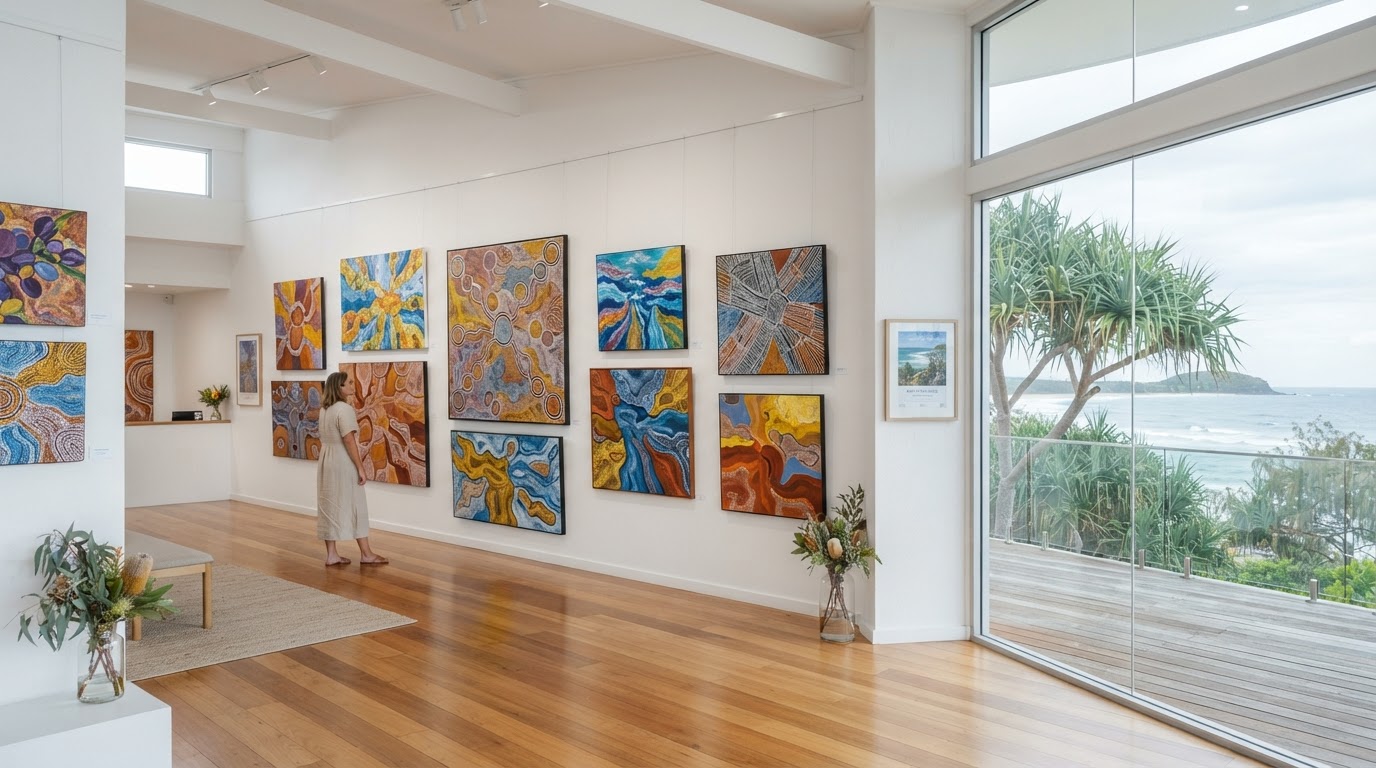
The Papunya movement
Began in 1971 and sparked the global recognition of Australian desert painting
The dotting shield
Dots were used strategically to veil secret sacred designs from uninitiated eyes
Global fine art
Recognised worldwide alongside top international contemporary abstract movements
In 1971, at the remote settlement of Papunya in Central Australia, senior desert men began painting their sacred sand and body designs onto scrap boards with house paint, sparking a global fine art renaissance.
In 1971, at the remote settlement of Papunya in Central Australia, senior desert men began painting their sacred sand and body designs onto scrap boards with house paint, sparking a global fine art renaissance. The moment is now regarded as one of the most significant events in the history of Australian art, the point at which an ancient tradition found a new medium and, through it, a global audience.
Before Papunya, sacred designs were created on the body for ceremony or drawn on the sand, ritually wiped clean at the ceremony's conclusion. The ground designs were temporary by nature, made for the moment of ceremony and then returned to the earth. Transferring these sacred designs onto permanent surfaces required careful cultural negotiation among senior elders, who had to weigh the opportunity to share their culture against the responsibility to protect sacred knowledge from uninitiated eyes.
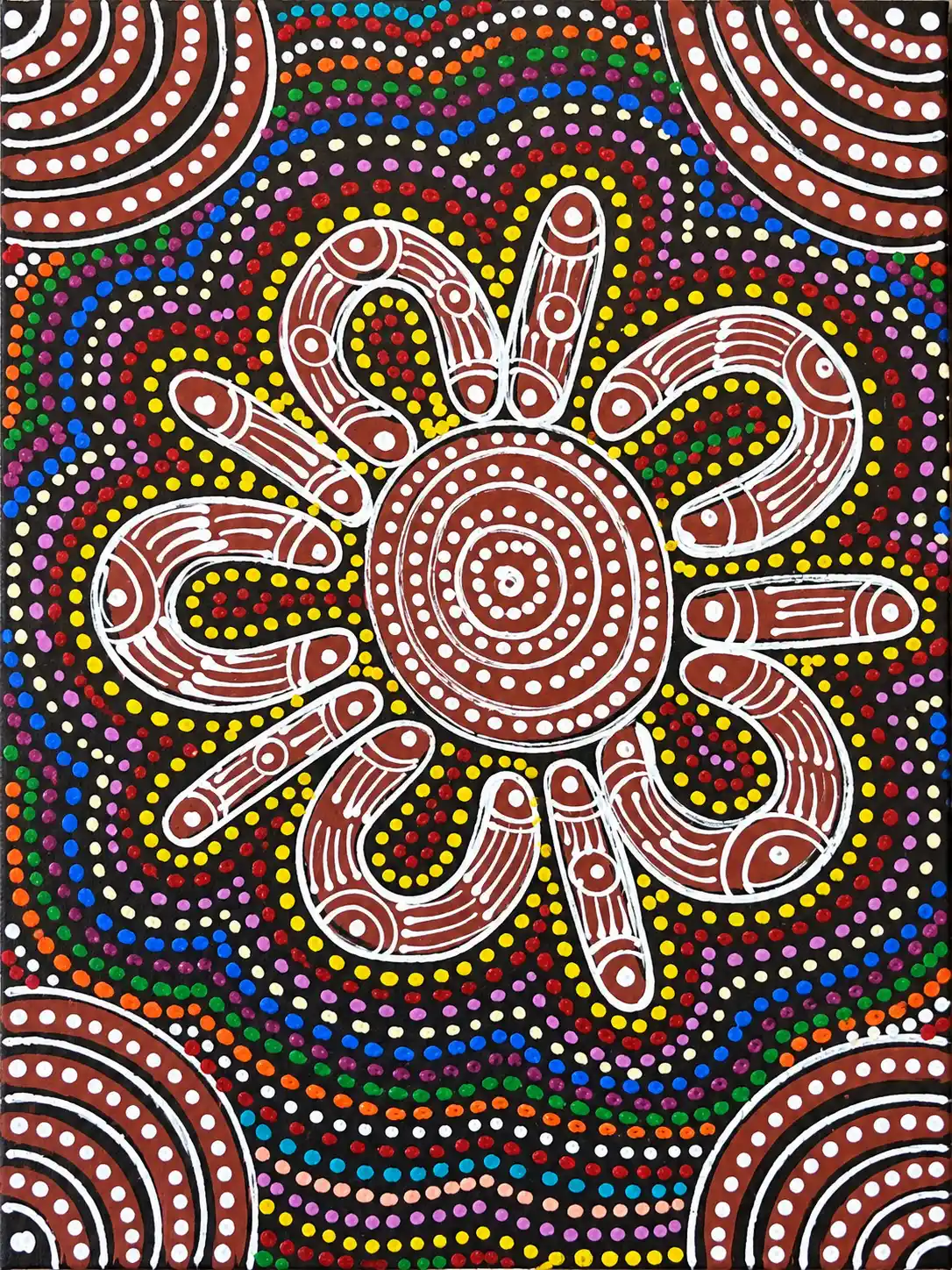
To protect sacred knowledge from uninitiated eyes, artists introduced the dotting technique as an overdotting shield, delicately obscuring secret sacred symbols while retaining the spiritual integrity of the story. The dots became a screen, a layer of concealment that allowed the beauty and energy of the work to be shared without revealing the most sacred elements beneath. What began as a protective measure evolved into one of the most recognisable and admired painting styles in the world, the shimmering fields of dot work that define Central and Western Desert painting.
The Papunya movement spread rapidly across the desert communities. At Yuendumu, Kintore, Utopia, and beyond, artists took up the new materials and began translating the stories of their country onto canvas. In Utopia, in the Eastern Desert, Anmatyerr and Alyawarr artists including Emily Kame Kngwarreye and the Numina sisters pioneered a more fluid, expressive approach, using sweeping brushwork rather than dot work to celebrate awelye, women's ceremony, and the bush medicine leaves that are central to women's knowledge.
Today, Aboriginal fine art hangs in the leading museums of Paris, New York, Tokyo, and Sydney, celebrated not as ethnographic craft but as some of the most dynamic, sophisticated abstract expressionism in global contemporary art. The journey from sacred ground design to museum wall has been extraordinary, and it has happened within a single lifetime. Yet the meaning of the work has not travelled so far. The stories painted on canvas today are the same stories once drawn in sand, and the artists who paint them hold the same responsibilities as the elders who first agreed to put them on board.
The renaissance that began at Papunya continues. New generations of artists, working in communities across the continent, are taking up the traditions of their families and finding their own voices within them. The materials may be modern and the audiences may be global, but the heart of the work remains where it has always been, in the country, the law, and the living Dreaming that the artists carry forward in every stroke.
For collectors, understanding this history deepens the experience of every work. A contemporary desert painting is not a copy of an ancient design but the latest chapter in a tradition that is still being written. The renaissance that began at Papunya did not create something new. It gave something ancient a new way to live, and in doing so, it ensured that one of the world's great artistic traditions would continue to grow, to evolve, and to reach new audiences for generations to come.