The Meaning Behind Desert Dot Painting
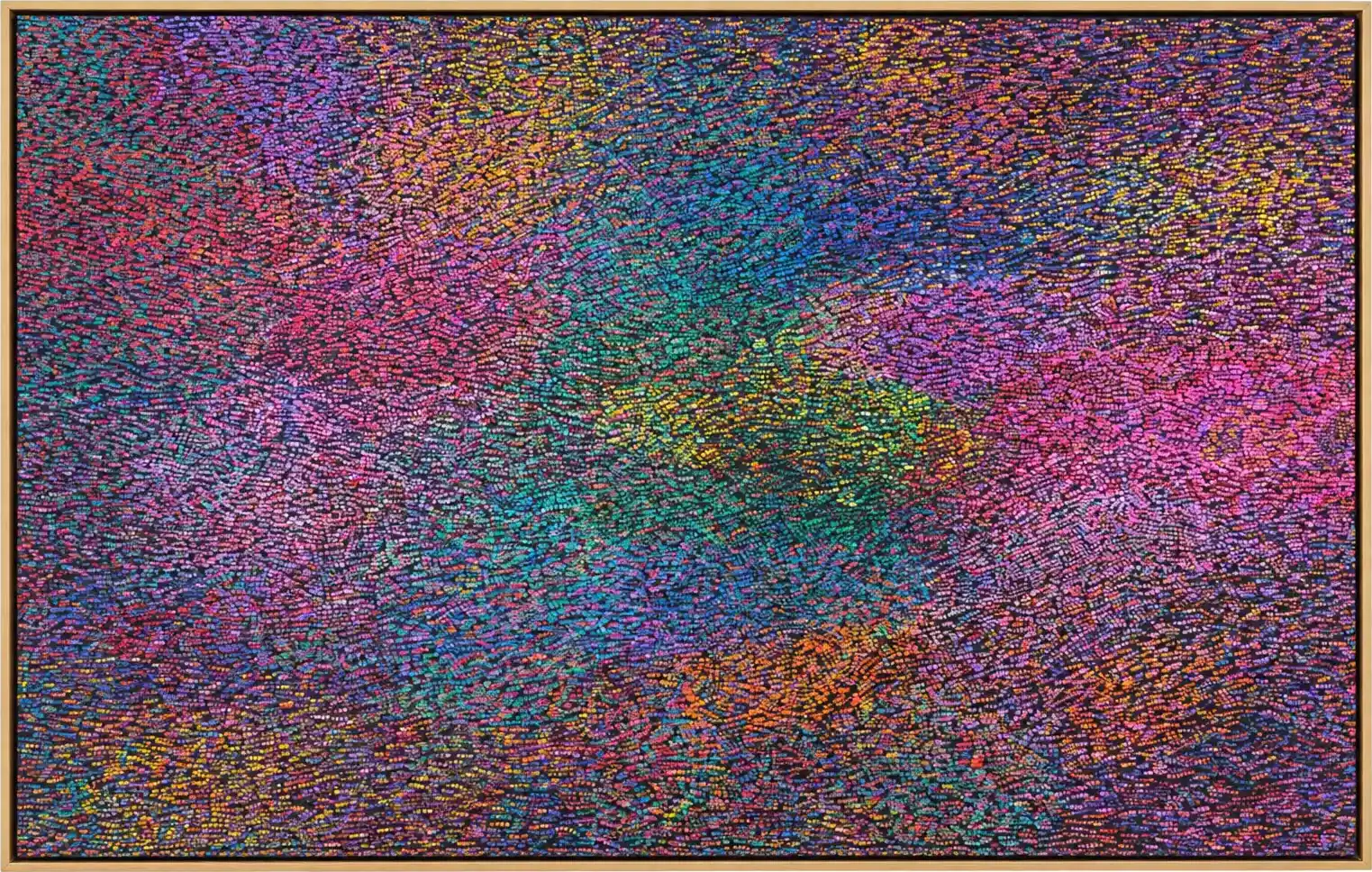
Fine dot work became internationally celebrated following the 1970s Papunya movement, originally serving as a deliberate visual screen to shield sacred ceremonial knowledge from uninitiated eyes.
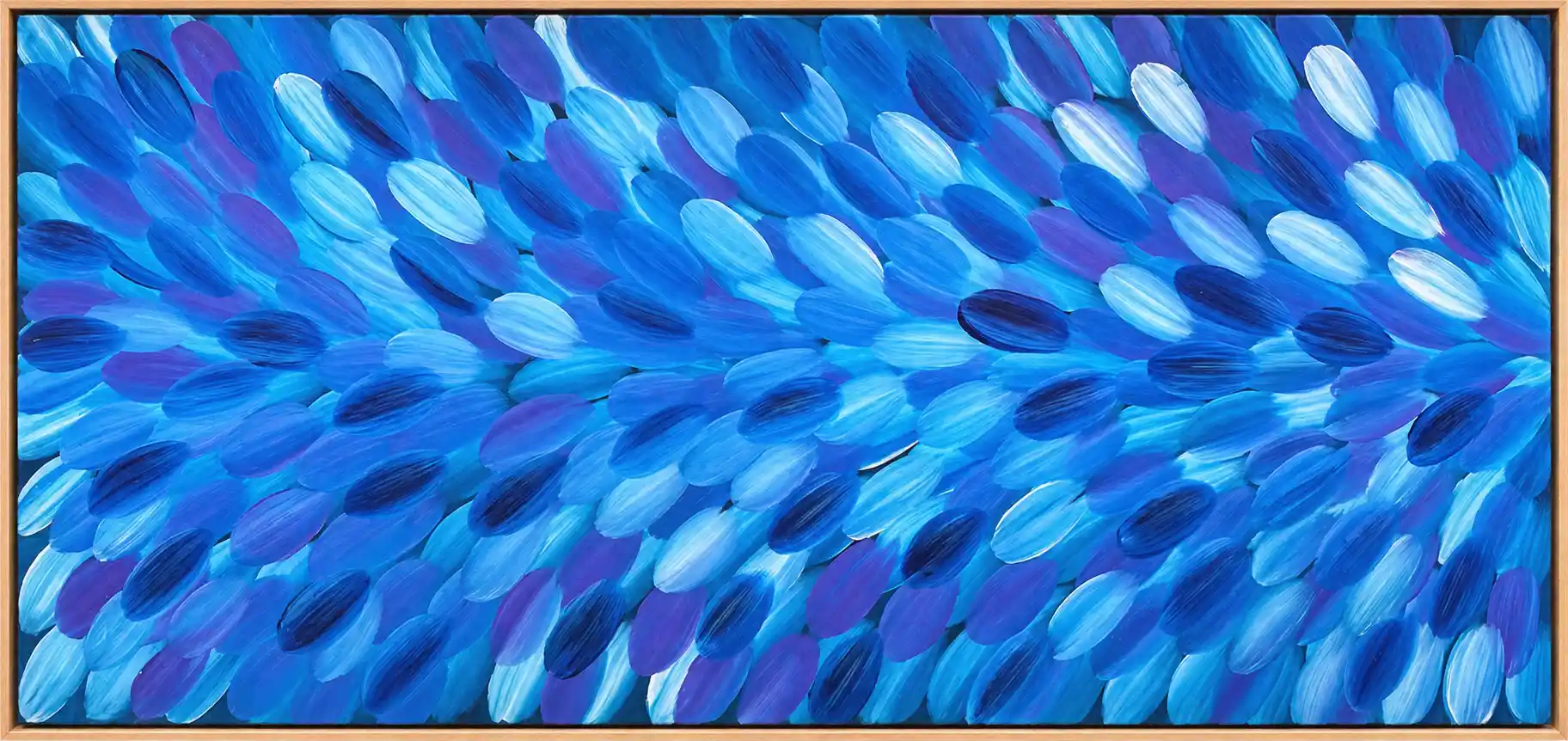
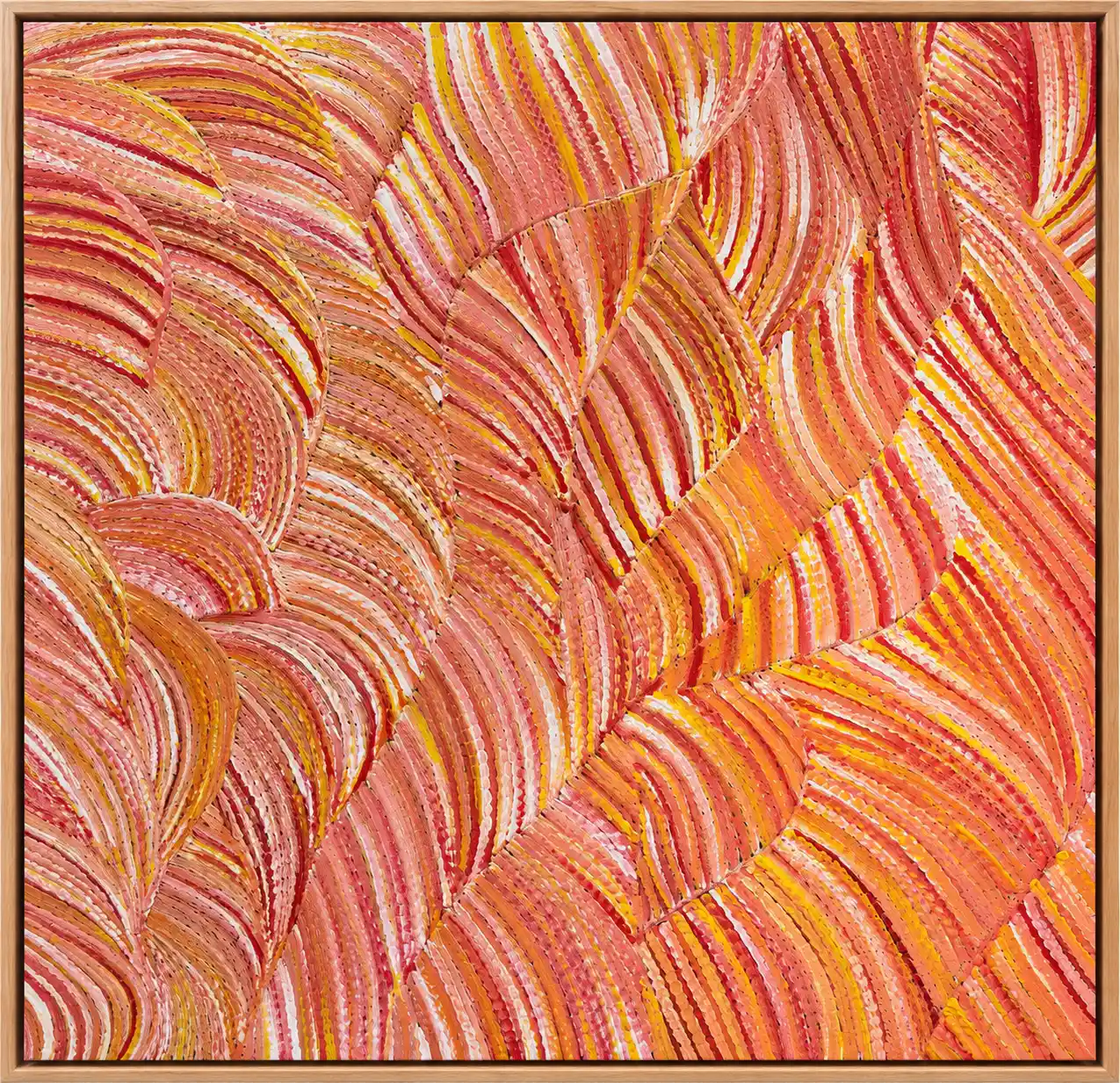
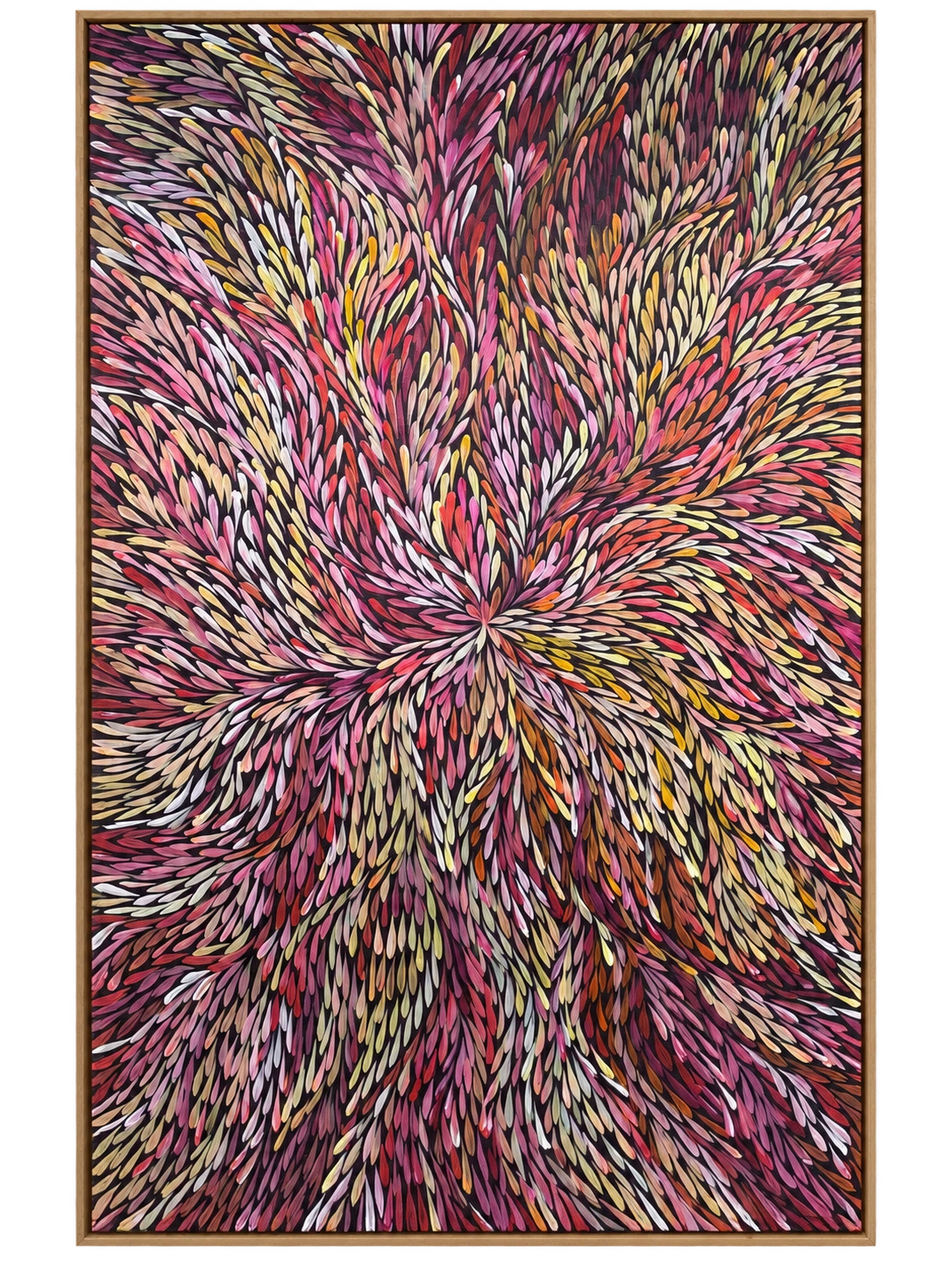
To global collectors, fine dot work is the hallmark of Central and Western Desert painting. Yet the widespread adoption of dots on canvas holds a fascinating cultural history grounded in secrecy and protection.
In 1971 at the desert settlement of Papunya, senior men began transferring sacred sand and ceremonial designs onto masonry board and canvas. As these early works began entering public exhibitions, elders grew concerned that sacred ritual secrets and sacred objects might be exposed to women, children, and uninitiated outsiders.
To resolve this, artists innovatively used fields of interlocking dots as an obscuring veil. The dots masked the secret ceremonial underpinnings while enabling the artists to share the beauty, energy, and sacred essence of their country with the wider world. Today, dotting has evolved into a masterly art form celebrated for its shimmering visual movement.