 Hover to view full
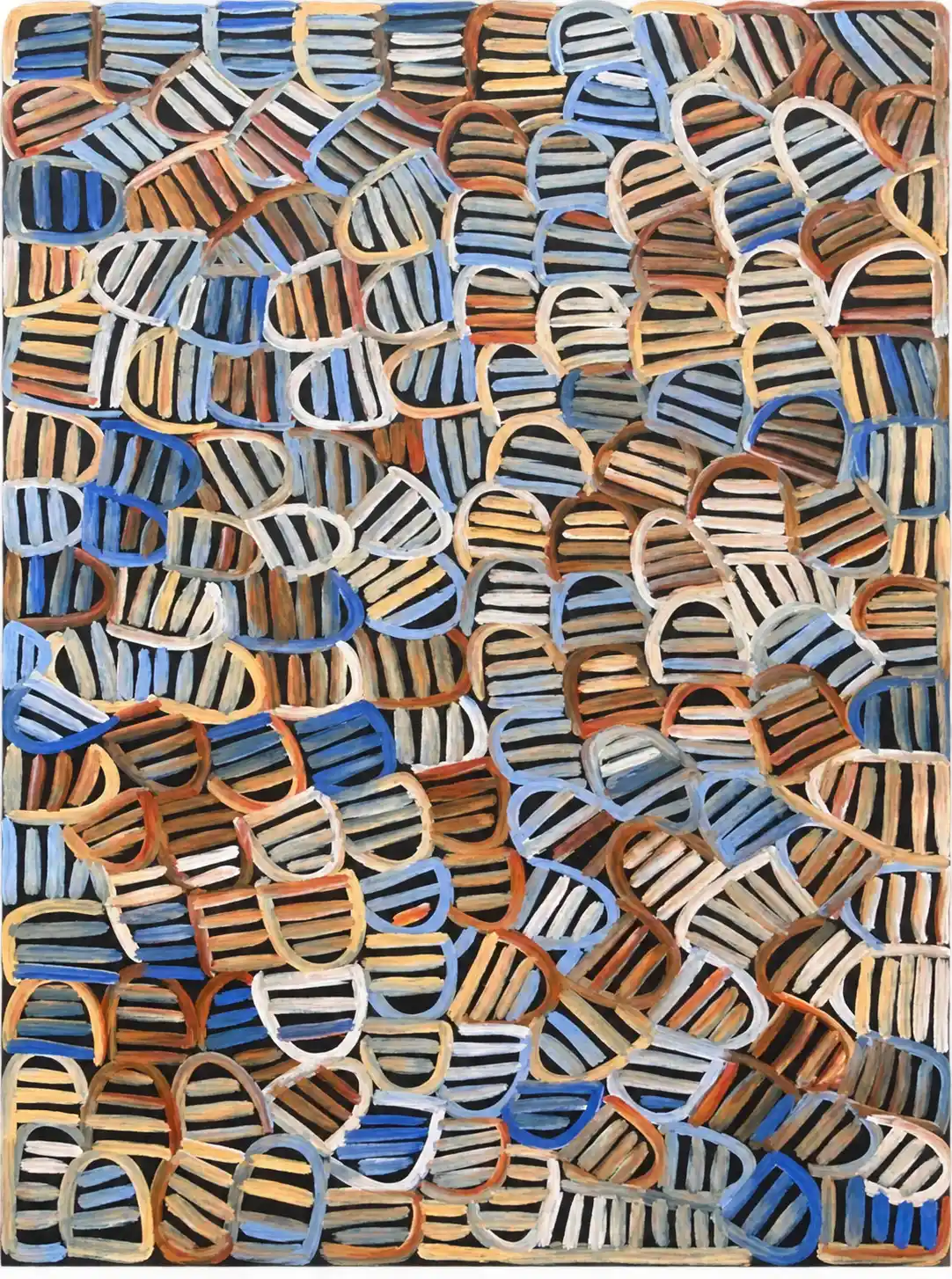
Women Ceremony
Louise Numina
From desert dot work and Utopia colour fields to Arnhem Land rarrk cross-hatching
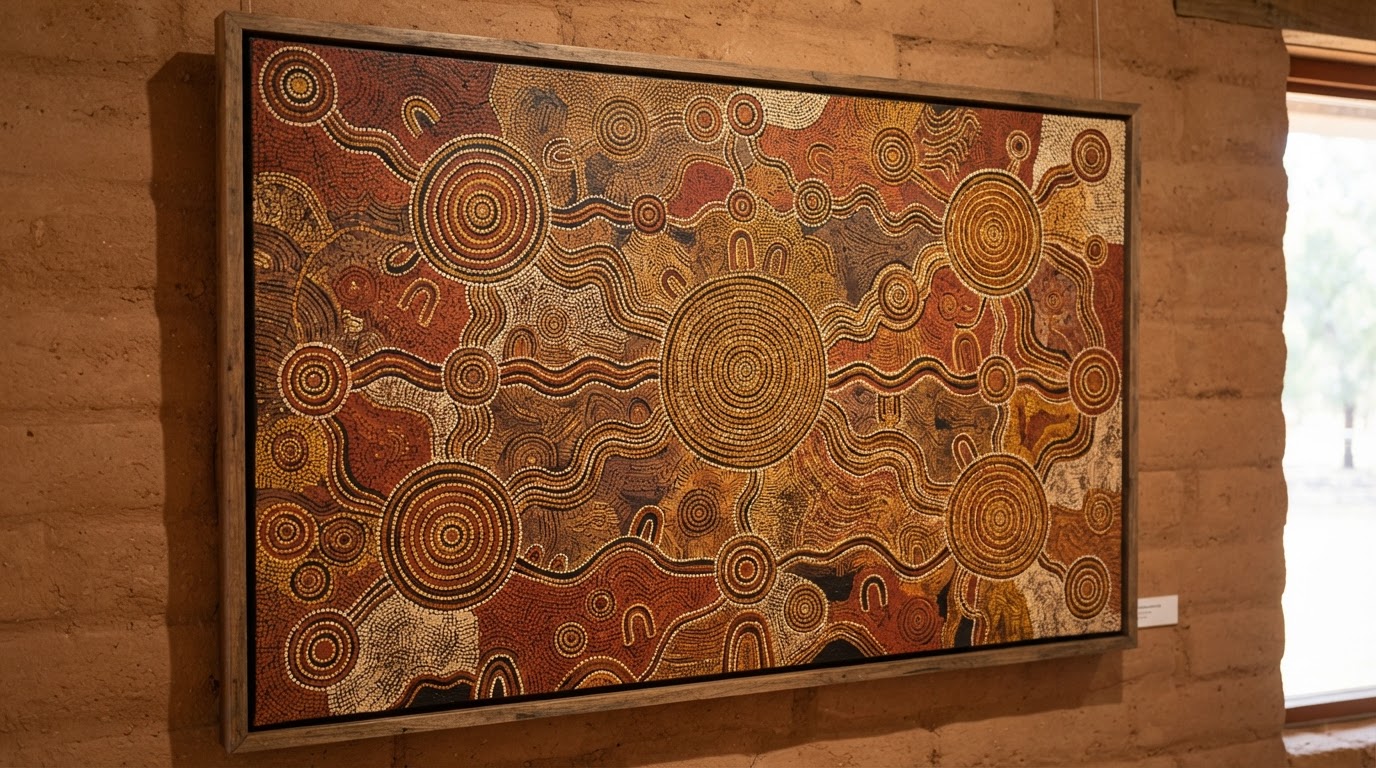
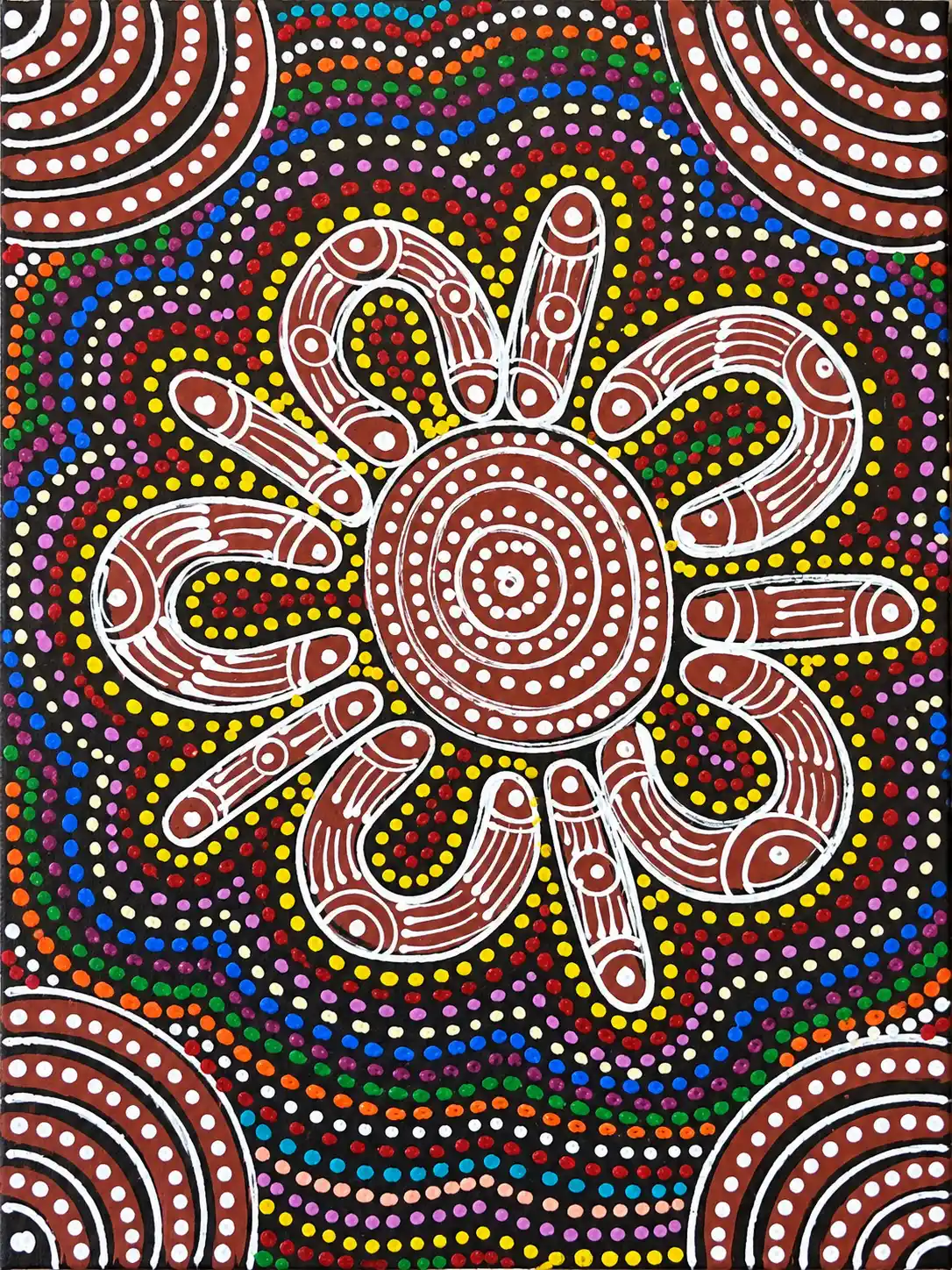
Desert dot work
Western and Central Desert: acrylic dotting, aerial maps of waterholes and spinifex plains
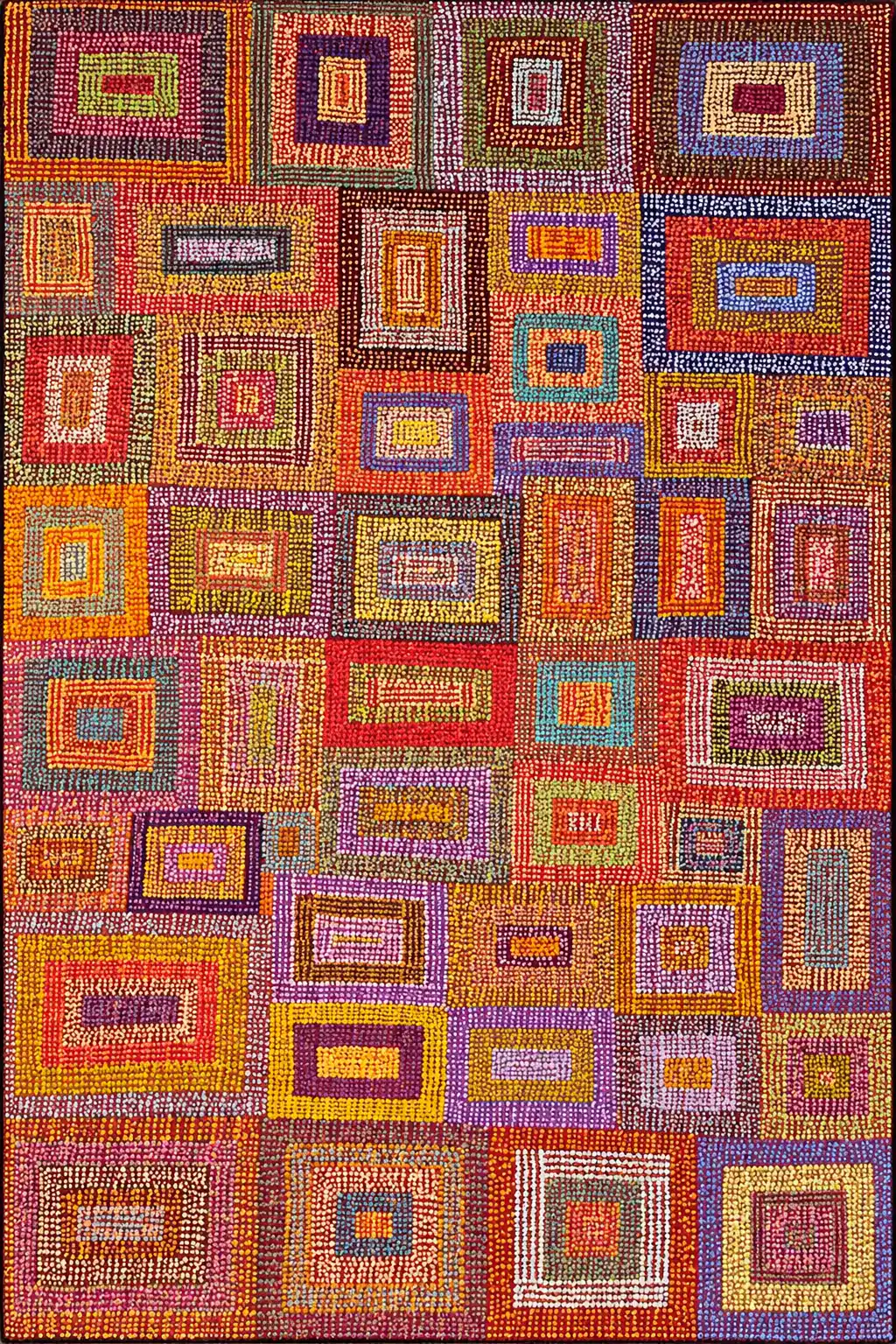
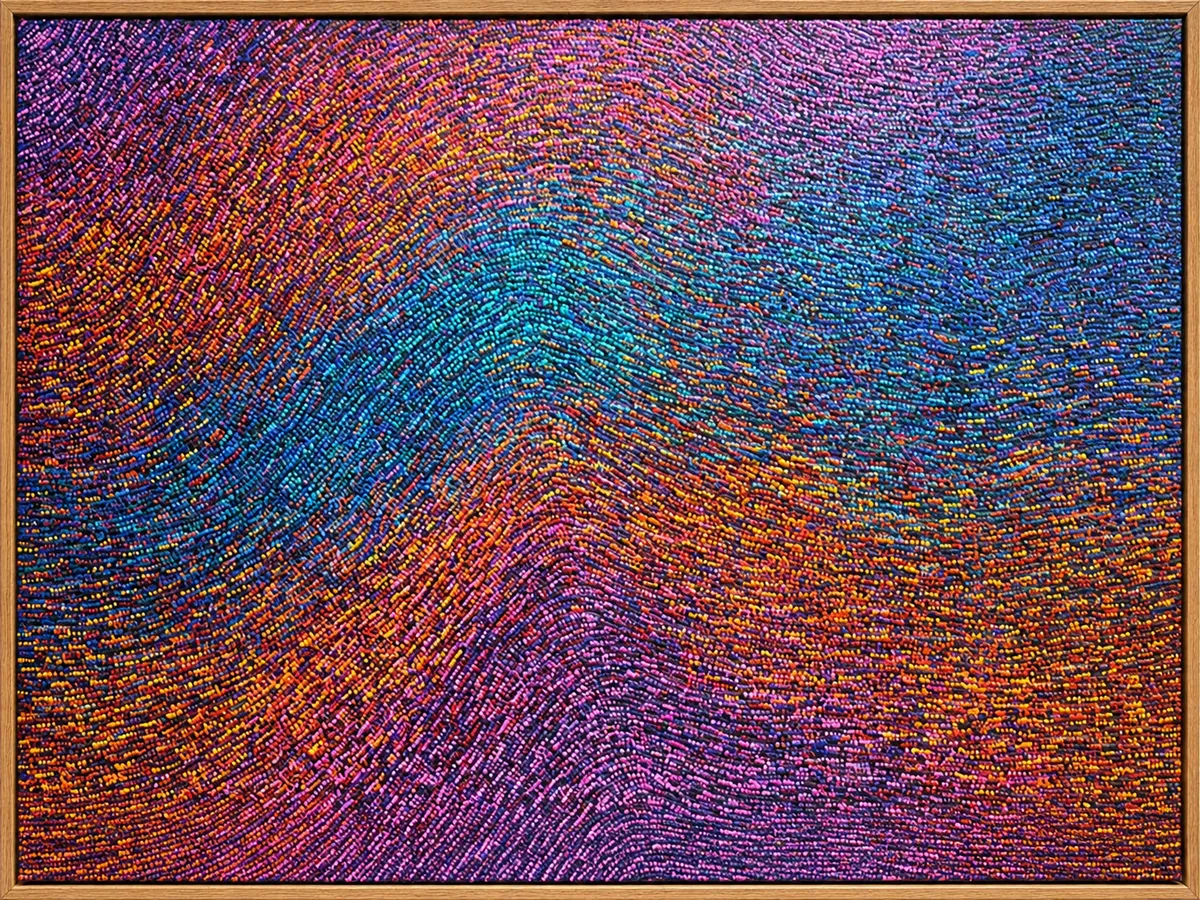
Utopia brushwork
Eastern Desert: expressive colour fields, awelye ceremony, and bush medicine leaves
Top End bark and rarrk
Arnhem Land: intricate cross-hatching using fine sedge brushes and natural pigments
There is no single Aboriginal art style. Across more than 250 distinct language nations, artists express visual traditions shaped by their unique terrain, flora, climate, and ceremonial practices.
There is no single Aboriginal art style. Across more than 250 distinct language nations, artists express visual traditions shaped by their unique terrain, flora, climate, and ceremonial practices. To appreciate Aboriginal art is to appreciate this diversity, the ways in which each region, each country, and each community has developed its own visual language to carry the stories and the law of the people who belong to it.
In the Central and Western Deserts, communities like Papunya, Yuendumu, and Kintore are renowned for vibrant acrylic dot work mapping sandhills, spinifex, bush tucker, and waterholes. The art of this region is characterised by the aerial perspective, the view from above that turns the canvas into a map of country. Dots build up shimmering surfaces that suggest the texture of the land, the scatter of seeds after rain, and the movement of wind across the sand. The colour palettes of the desert range from the deep reds and yellows of the earth to bright blues and greens that reflect the life that bursts forth when the rains come.
In Utopia, in the Eastern Desert, Alyawarre and Anmatyerre artists including Emily Kame Kngwarreye and the Numina sisters pioneered fluid, expressive brushwork celebrating awelye women's ceremony and bush medicine leaves. Where the Western Desert tradition favours dotting, the Utopia tradition favours flowing, painterly marks that sweep across the canvas. Emily Kngwarreye, one of the most celebrated Australian artists of the late twentieth century, produced work that ranged from delicate fields of dots to bold, gestural abstractions, all rooted in the stories and the country of her ancestors.
Across Arnhem Land and the Top End, artists paint on eucalyptus bark using fine grass brushes to create rarrk cross hatching, imbuing ancestral spirits and barramundi with spiritual power. The bark paintings of this region depict the creatures and the ancestral beings of the rivers, wetlands, and floodplains, rendered with a precision that reflects intimate knowledge of the animals and the waters they inhabit. The cross hatched patterns that fill the bodies of these figures are not merely decorative. They generate a shimmering visual power that speaks of the sacred energy within the subject.
In the Kimberley, bold natural ochres and minimalist representations of Wandjina and Gwion Gwion ancestral figures dominate the landscape. The Wandjina, the great rain makers of the Kimberley, are painted with large round eyes, no mouth, and a halo of radiating lines, their images refreshed each season on the rock shelters to keep the rains coming. The art of this region is deeply rooted in the rock art traditions of its ancestors, carried forward by contemporary painters who continue to work with the ochres and the stories of their country.
Each region is a living testament to the deep diversity of Indigenous culture. The Tiwi Islands have their own ceremonial traditions, expressed in the ochre patterns of the Pukamani funeral rites and the Kulama ceremony of life and renewal. The art of the Pilbara draws on the creation stories of the Yindjibarndi people, while the painters of Ampilatwatja celebrate the bush medicine plants of their country in bright, finely dotted landscapes. Across the continent, every country has its own style, its own stories, and its own way of making the land visible.
For collectors, understanding these regional traditions adds richness to every acquisition. A work from the Western Desert, a work from Utopia, a work from Arnhem Land, and a work from the Kimberley each carry the colours, the stories, and the spirit of a particular country. Together, they form a portrait of a continent held together not by a single style but by the diversity of its peoples and the depth of their connection to the lands they have cared for, and been cared for by, since the beginning.