 Hover to view full
Beginning of Time
Stan Yarramunua
From ancient rock galleries and ochre markings to contemporary global recognition
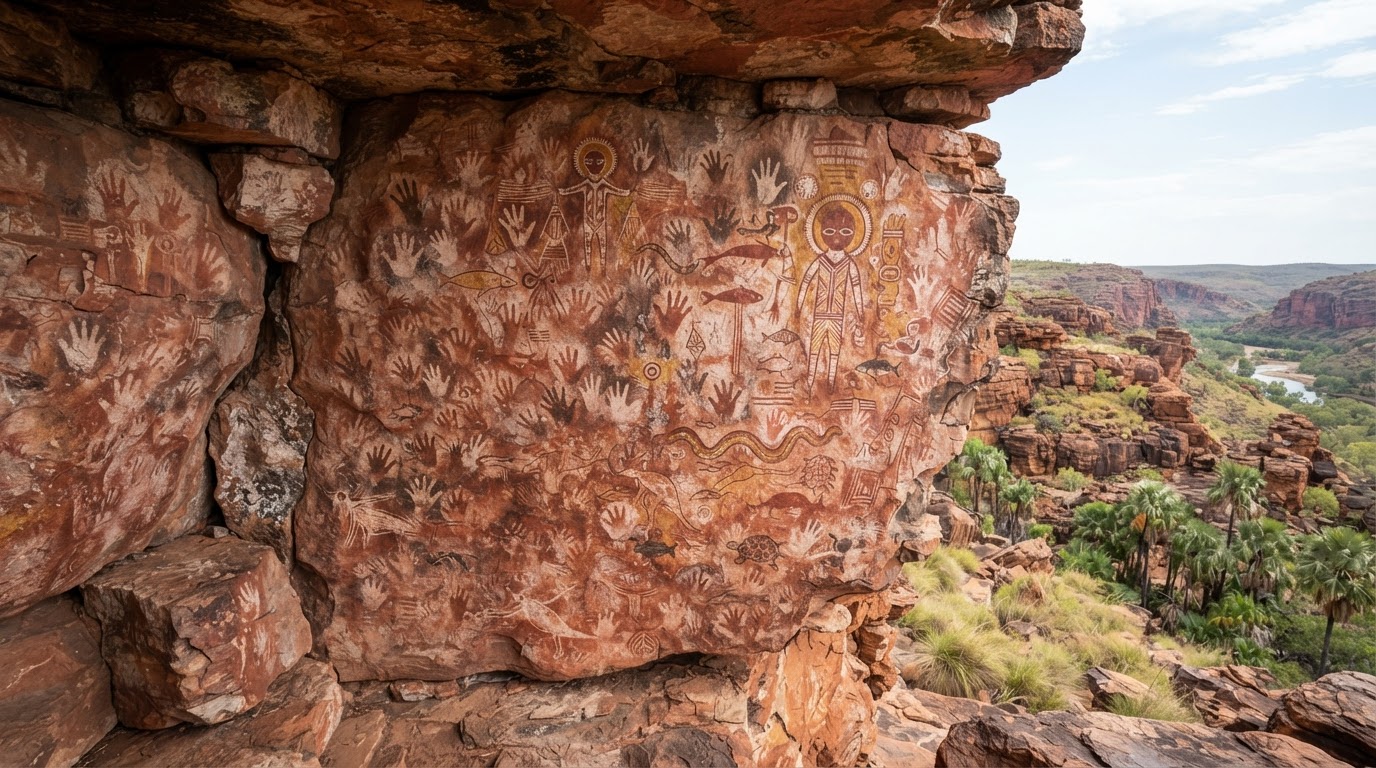
Living archive
Rock art records 60,000 years of environmental change, fauna, and ceremony
Sacred ochres
Natural red, yellow, and white earth pigments mined from sacred quarries and traded across country
Unbroken line
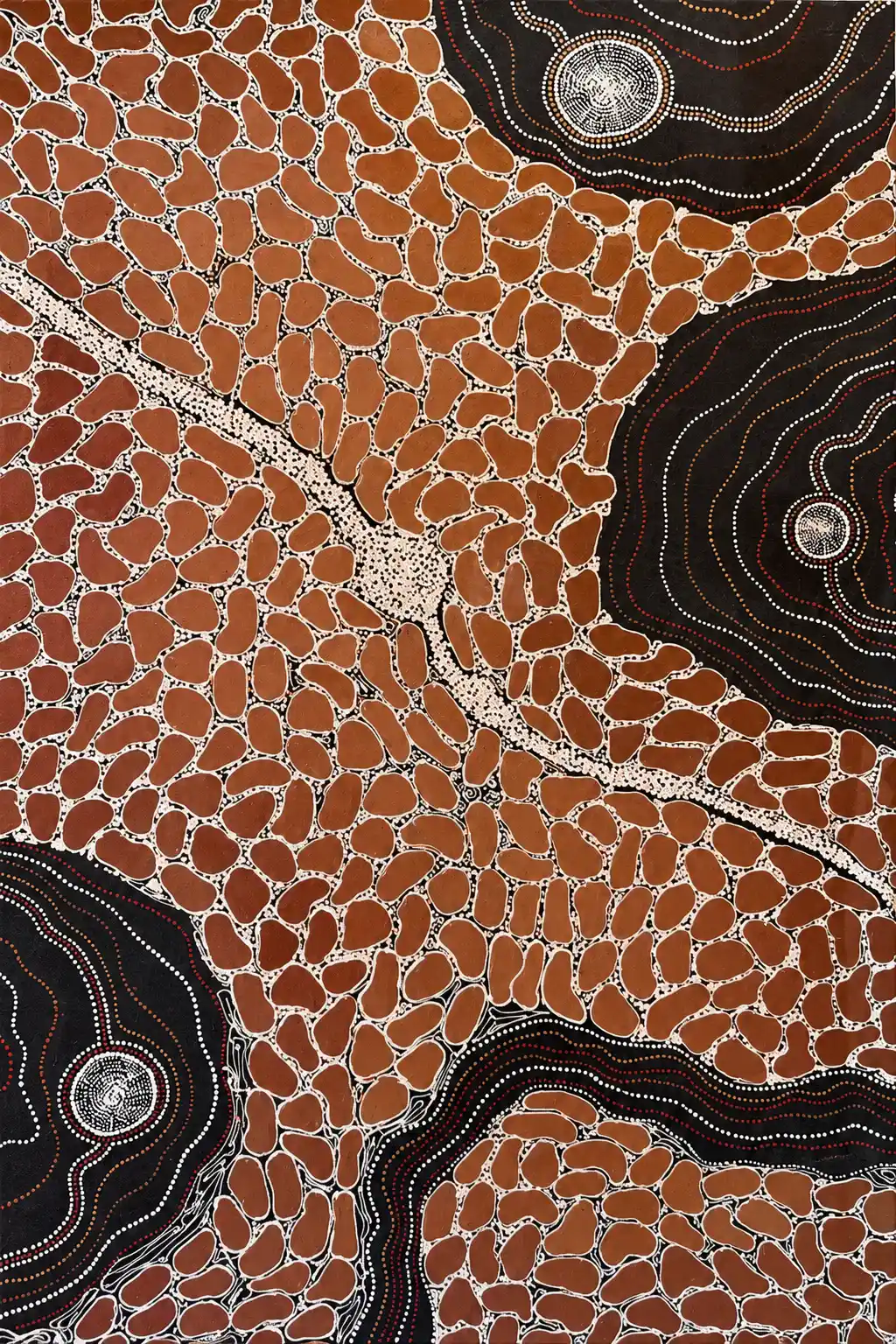
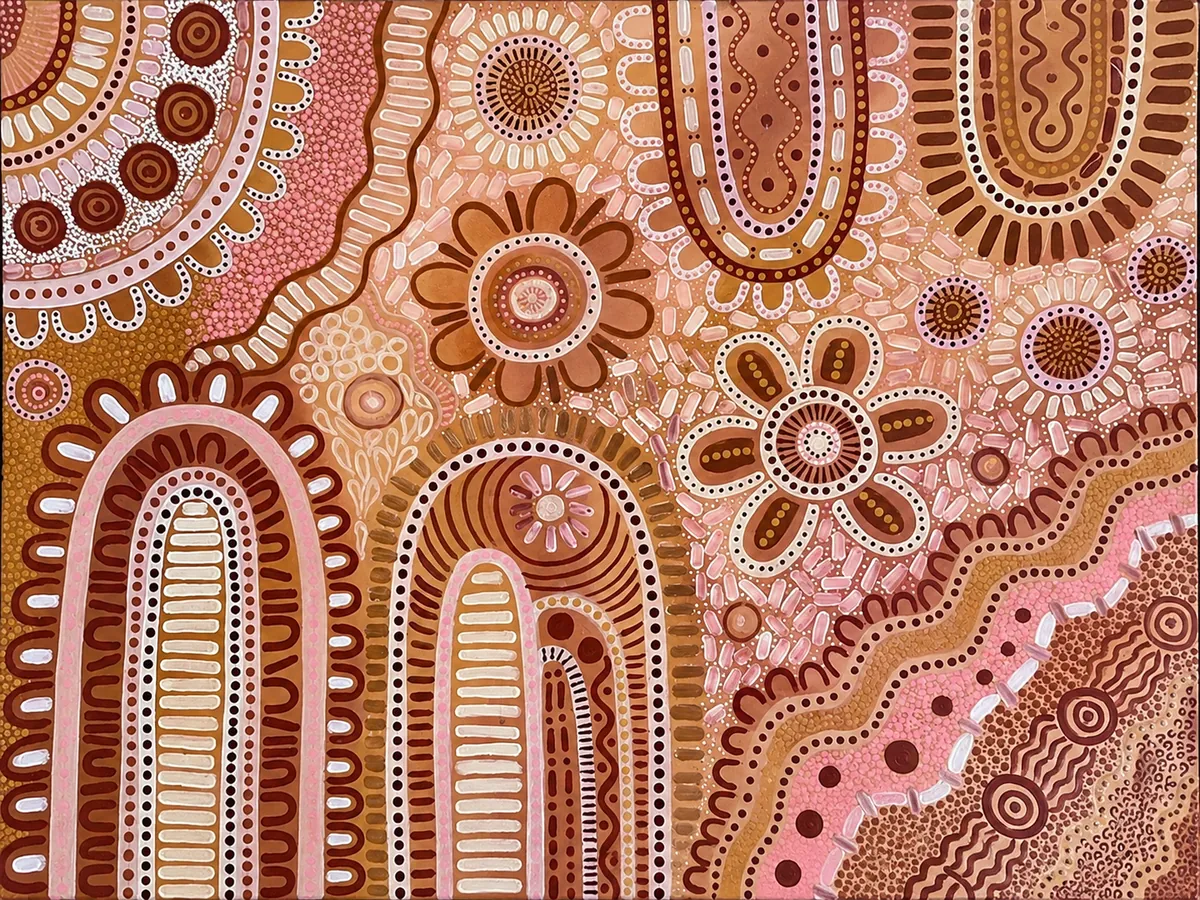
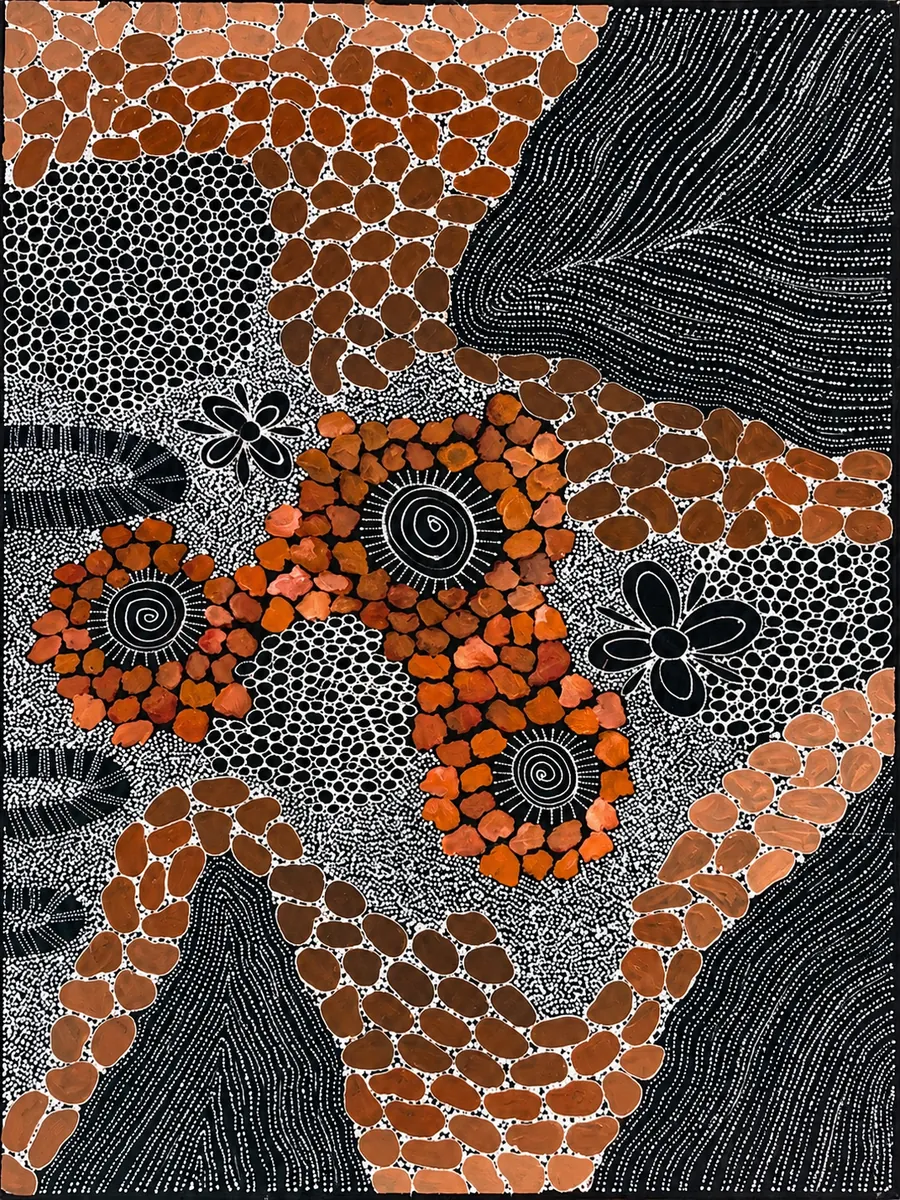
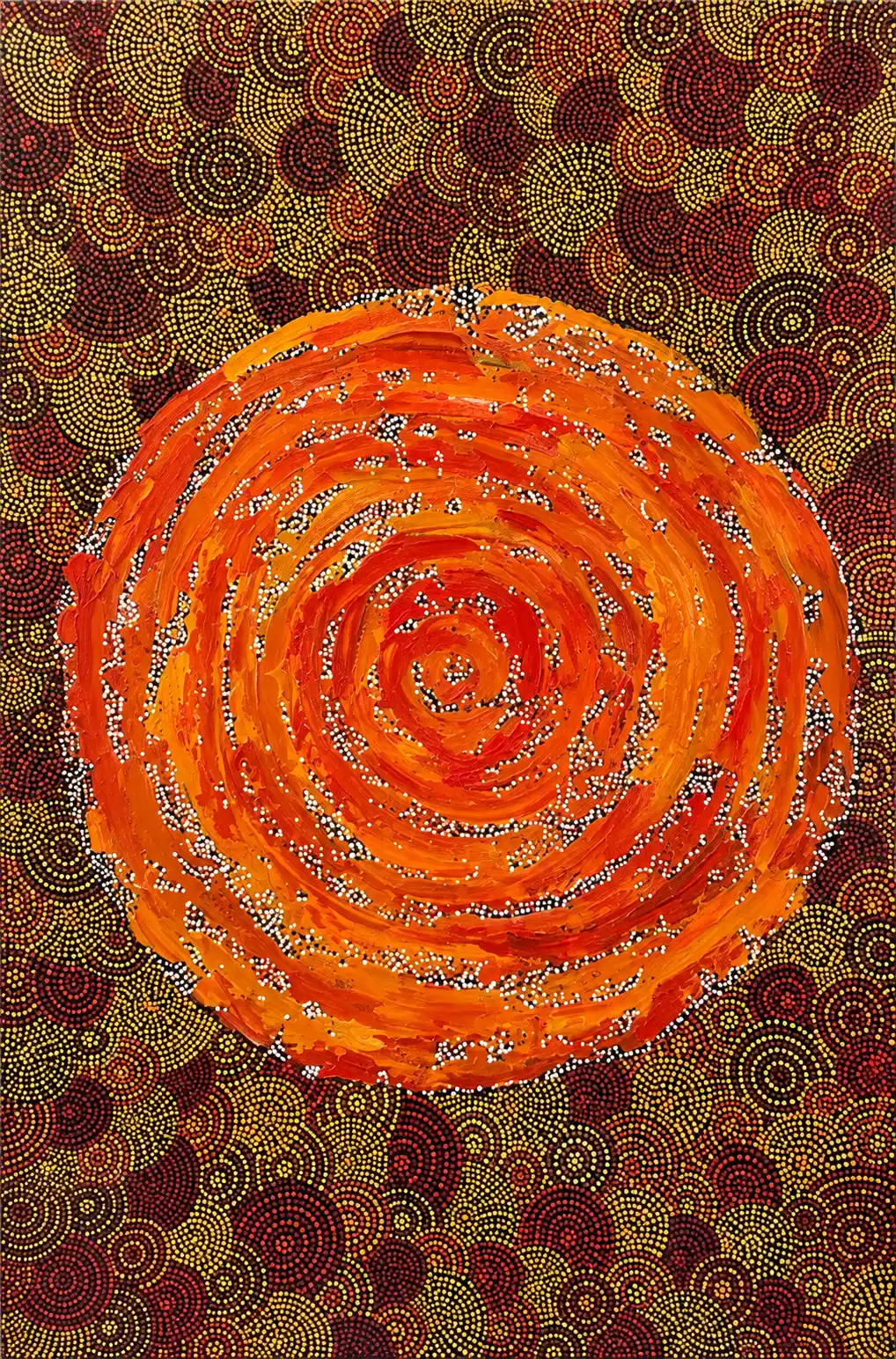
Contemporary canvas painting directly inherits the techniques and sacred purpose of ancient rock art
Archaeological records across Australia document rock art galleries dating back more than 60,000 years, establishing Aboriginal visual culture as the world's oldest unbroken artistic tradition.
Archaeological records across Australia document rock art galleries dating back more than 60,000 years, establishing Aboriginal visual culture as the world's oldest unbroken artistic tradition. Long before the pyramids of Egypt, long before the painted caves of Europe, the ancestors of today's First Nations peoples were marking the rock shelters and stone walls of this continent with images that still speak across the millennia.
Long before canvas and synthetic pigments were introduced, First Nations peoples expressed their connection to country through ochre body painting for ceremony, tree carvings, ceremonial ground designs made from crushed seeds and pulped flowers, and magnificent rock art shelters. These traditions were not separate from daily life but woven through it, part of the ceremonies, the teaching, and the law that held communities together. The materials came from the land itself, red and yellow ochres mined from sacred quarries, white kaolin clay, black charcoal, all carrying the colours and the spirit of the country they came from.
These rock walls served as living archives, documenting fauna now extinct, climatic shifts, ancient ceremonies, and historic encounters. Some shelters show animals that have long since vanished from the region, their images preserved by generations of artists who refreshed the pigments across thousands of years. The ochres used were mined from sacred quarry sites like the legendary quarries of the Flinders Ranges and Central Australia, traded across thousands of kilometres in a network that connected distant communities through the sharing of colour and the stories it carried.
The survival of this visual tradition across more than sixty millennia stands as a powerful testament to the endurance and strength of First Nations culture and its custodians. Where other ancient civilisations left monuments of stone that outlasted the cultures that built them, Aboriginal visual culture remained alive in the hands of its people, passed down without interruption through the longest continuous chain of artistic transmission known to humanity. Each generation received the knowledge, performed the ceremonies, refreshed the images, and passed them on.
This continuity is what sets Aboriginal art apart. When a contemporary painter takes up the stories of their country and places them on canvas, they are not reviving a lost tradition. They are continuing one that has never been broken. The symbols, the stories, and the responsibilities have travelled from rock wall to body to sand to bark to canvas in an unbroken line, adapting to new materials without losing the depth of meaning they have carried since the earliest days of human mark making on this continent.
For collectors and viewers, this history gives every work a weight that no other artistic tradition can match. A painting made last year sits at the end of a sixty thousand year lineage. The dots, the lines, the circles, and the stories they encode are not the invention of a single artist or a single generation but the inheritance of the oldest continuous living culture on earth, carried forward by the people who have always held it.